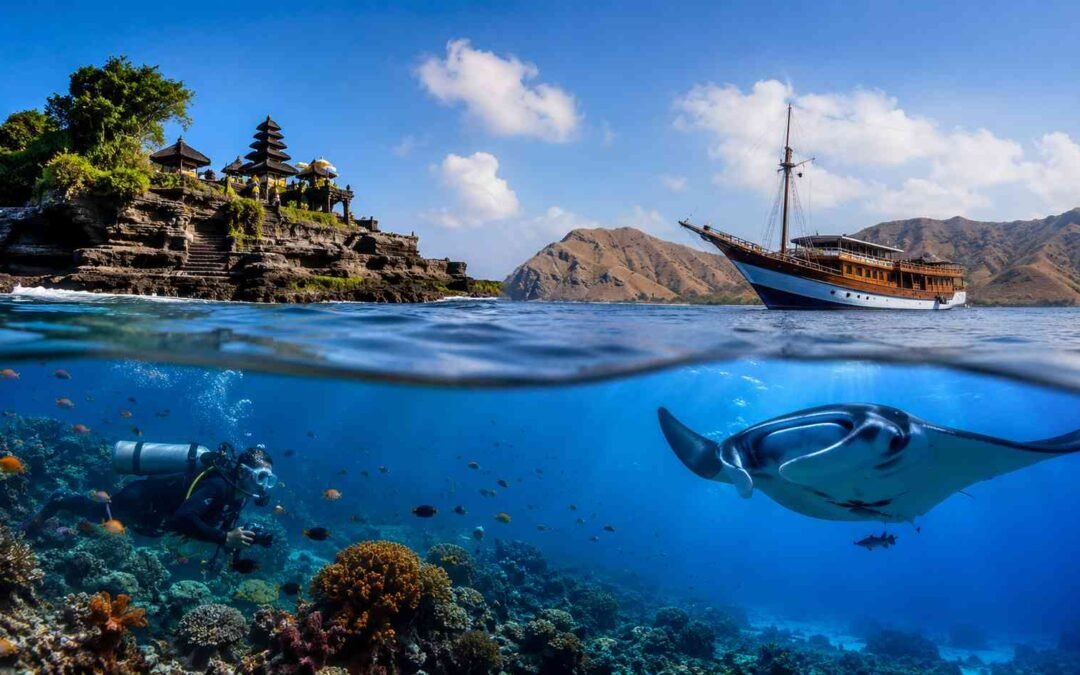
Bali Diving vs Komodo Diving is one of the most common comparisons among scuba divers planning a trip to Indonesia. Both destinations are world-famous for their underwater beauty, healthy coral reefs, and incredible marine biodiversity. However, they offer very different diving experiences. Bali is known for its accessibility, beginner-friendly dive sites, diverse underwater landscapes, and excellent dive schools. Komodo, on the other hand, is famous for thrilling drift dives, powerful currents, and encounters with large pelagic species.
If you're deciding between Bali and Komodo for your next diving adventure, this guide will compare everything from marine life and dive conditions to costs, accessibility, and who each destination is best suited for.
Why Bali and Komodo Are World-Class Diving Destinations
Indonesia sits within the Coral Triangle, the richest marine ecosystem on Earth. This region contains over 75% of the world's coral species and thousands of fish species. Both Bali and Komodo benefit from this extraordinary biodiversity, making them two of the top diving destinations globally.
Although they belong to the same country, their underwater environments are surprisingly different, giving divers unique experiences in each location.
Overview of Diving in Bali
Bali has become one of Asia's most popular diving destinations because it combines excellent dive sites with comfortable tourism infrastructure.
Popular dive areas include:
- Tulamben
- Amed
- Nusa Penida
- Nusa Lembongan
- Padang Bai
- Candidasa
- Menjangan Island
Each location offers unique underwater attractions ranging from historic shipwrecks to colorful coral gardens and dramatic underwater walls.
Bali is also one of the best places in Southeast Asia to complete scuba certification thanks to its experienced instructors, modern dive centers, and calm training sites.
Overview of Diving in Komodo
Komodo National Park is often ranked among the world's greatest diving destinations.
Its underwater ecosystem is shaped by strong ocean currents that bring nutrient-rich water throughout the marine park. These currents create spectacular coral growth and attract an enormous variety of marine life.
Komodo is famous for:
- Fast drift dives
- Giant manta rays
- Reef sharks
- Eagle rays
- Schools of trevally
- Tuna
- Barracuda
- Vibrant soft corals
- Pristine reefs
Many experienced divers consider Komodo to be the pinnacle of diving in Indonesia.
Marine Life Comparison
Bali Marine Life
Bali offers remarkable biodiversity suitable for photographers and recreational divers.
Common sightings include:
- Green turtles
- Hawksbill turtles
- Reef sharks
- Blue-spotted stingrays
- Frogfish
- Ghost pipefish
- Seahorses
- Octopus
- Nudibranchs
- Garden eels
- Giant moray eels
Seasonally, Bali is also famous for:
- Oceanic manta rays
- Mola Mola (Sunfish)
These seasonal highlights attract divers from around the world.
Komodo Marine Life
Komodo offers everything Bali has, plus significantly more large marine animals.
Frequent encounters include:
- Giant manta rays
- Grey reef sharks
- White-tip reef sharks
- Black-tip reef sharks
- Eagle rays
- Marble rays
- Dolphins
- Tuna
- Giant trevally
- Barracuda tornadoes
- Napoleon wrasse
- Giant groupers
The fish biomass in Komodo is generally much higher than Bali, making dives feel more alive.
Coral Reef Quality
Both destinations feature exceptional coral reefs, but their styles differ.
Bali
Bali offers:
- Healthy hard corals
- Artificial reefs
- Volcanic underwater landscapes
- Coral gardens
- Shipwreck ecosystems
Tulamben's Liberty Ship is one of the world's most famous wreck dives.
Komodo
Komodo is famous for:
- Massive coral formations
- Soft coral forests
- Vibrant reef colors
- Incredible coral density
- High fish populations
Many dive professionals consider Komodo's coral reefs among the healthiest on Earth.
Diving Conditions
Bali
Water temperature:
- 20°C–30°C depending on season
Visibility:
- 15–35 meters
Currents:
- Mild to moderate
- Strong only at selected sites like Nusa Penida
Difficulty:
- Beginner to advanced
Komodo
Water temperature:
- 24°C–29°C
Visibility:
- 20–40 meters
Currents:
- Moderate to extremely strong
Difficulty:
- Intermediate to advanced
Komodo demands better buoyancy control and greater confidence underwater.
Best for Beginners
Bali Wins
Reasons include:
- Calm dive sites
- Easy shore entries
- Excellent training locations
- Numerous beginner-friendly reefs
- Affordable certification courses
Many divers complete their Open Water certification in Bali before exploring other Indonesian destinations.
Best for Advanced Divers
Komodo Wins
Experienced divers love Komodo because of:
- Challenging drift dives
- Strong currents
- Deeper walls
- Pelagic encounters
- Advanced navigation
Divers seeking excitement often rank Komodo among the best destinations worldwide.
Famous Dive Sites
Bali
Popular sites include:
- USS Liberty Shipwreck
- Crystal Bay
- Manta Point
- Blue Lagoon
- Coral Garden
- Drop Off
- Gili Tepekong
- Menjangan Wall
Komodo
Top sites include:
- Batu Bolong
- Castle Rock
- Crystal Rock
- Manta Alley
- Tatawa Besar
- The Cauldron
- Yellow Wall
- Siaba Besar
Many of these sites consistently appear on lists of the world's best dives.
Underwater Photography
Bali
Excellent for:
- Macro photography
- Wreck photography
- Muck diving
- Nudibranchs
- Frogfish
- Seahorses
Komodo
Perfect for:
- Wide-angle photography
- Sharks
- Manta rays
- Massive coral reefs
- Schooling fish
- Dramatic reef scenes
Professional underwater photographers often visit both destinations because each offers unique subjects.
Accessibility
Bali
Getting to Bali is easy.
Ngurah Rai International Airport receives direct international flights from:
- Australia
- Singapore
- Malaysia
- Japan
- South Korea
- Middle East
- Europe (seasonal)
Most dive sites are reachable by road within one to three hours.
Komodo
Travel requires additional planning.
Visitors typically:
- Fly to Labuan Bajo
- Join dive boats
- Take speedboats
- Liveaboard cruises
Travel time is longer but often considered worthwhile.
Accommodation Options
Bali
Accommodation choices include:
- Budget hostels
- Guesthouses
- Boutique hotels
- Luxury resorts
- Beachfront villas
Prices suit every budget.
Komodo
Accommodation is centered around Labuan Bajo and includes:
- Budget hotels
- Mid-range resorts
- Luxury waterfront hotels
- Liveaboard dive boats
Many divers prefer liveaboards to maximize diving opportunities.
Cost Comparison
Bali
Average prices:
- Fun dive: $35–70
- Open Water Course: $300–450
- Accommodation: Budget to luxury
- Transportation: Affordable
Komodo
Average prices:
- Fun dive: $80–180
- Liveaboard trips: Higher investment
- National park fees
- Boat transfers
Komodo generally costs significantly more than Bali.
Read more: Do You Need Insurance for Diving in Bali?
Best Time to Dive
Bali
Excellent diving year-round.
Peak visibility often occurs during the dry season from April to October.
Komodo
Best diving conditions generally occur between April and November.
However, diving remains possible throughout much of the year depending on weather conditions.
Read more: Bali Diving Travel Checklist
Safety Considerations
Bali is generally more forgiving for newer divers.
Komodo requires greater awareness due to:
- Strong currents
- Drift diving
- Deeper profiles
- Remote locations
Following dive guides is especially important in Komodo.
Read more: How to Plan a Dive Trip to Bali
Which Destination Offers Better Value?
Choose Bali If You Want:
- Beginner-friendly diving
- Affordable dive holidays
- Scuba certification
- Shipwreck diving
- Macro photography
- Flexible travel
- Family-friendly vacations
Choose Komodo If You Want:
- World-class drift diving
- Manta ray encounters
- Shark diving
- Advanced dive experiences
- Spectacular coral reefs
- Remote adventure
- Liveaboard expeditions
Read more: Bali Diving Bucket List Experiences
Can You Visit Both?
Absolutely.
Many international visitors combine Bali and Komodo in one diving holiday.
A typical itinerary includes:
- 5–7 days diving in Bali
- Flight to Labuan Bajo
- 3–5 days diving in Komodo
This combination allows divers to experience Indonesia's incredible underwater diversity in a single trip.
Read more: Is Bali a Good Place for Advanced Diving?
Final Thoughts
When comparing Bali Diving vs Komodo Diving, there is no universal winner because both destinations excel in different ways. Bali stands out for its accessibility, affordable prices, diverse dive sites, and suitability for beginners, making it an excellent choice for learning to dive or enjoying a relaxed underwater holiday. Komodo delivers a more adventurous experience with powerful drift dives, abundant pelagic marine life, and some of the healthiest coral reefs on the planet, making it a dream destination for experienced divers.
If you're new to scuba diving or traveling with family, Bali is often the ideal choice. If you're seeking adrenaline, strong currents, and unforgettable encounters with manta rays and sharks, Komodo offers one of the most rewarding dive adventures anywhere in the world. Many divers eventually discover that the best decision isn't choosing one over the other—it's experiencing both.