How to Prepare for Multiple Dive Days is one of the most important topics every scuba diver should understand before planning a diving holiday. Whether you are joining a liveaboard trip, exploring several dive sites over consecutive days, or completing a diving course, preparing properly can significantly improve your comfort, safety, and overall experience. Multiple dive days place greater physical and mental demands on your body than a single recreational dive, making good preparation essential for enjoying every underwater adventure.
A successful multi-day diving trip is not just about having the right scuba equipment. It also involves maintaining your health, staying hydrated, getting enough rest, planning your dive schedule carefully, and understanding how repetitive dives affect your body. With proper preparation, you can reduce fatigue, improve buoyancy control, conserve air, and maximize every dive.
Why Preparing for Multiple Dive Days Matters
Diving for several consecutive days places repeated stress on your body. Every dive exposes you to increased pressure, changes in temperature, and physical exertion. While recreational diving is generally very safe when conducted within training limits, repetitive dives require more attention to personal health and dive planning.
Proper preparation helps you:
- Reduce fatigue throughout the trip.
- Lower the risk of dehydration.
- Improve concentration underwater.
- Maintain better buoyancy and air consumption.
- Recover faster between dives.
- Minimize the risk of decompression-related problems.
- Enjoy every dive without unnecessary discomfort.
Divers who prepare well often notice they feel stronger and more relaxed by the end of a diving vacation.
Get Enough Rest Before Your Trip
Quality sleep begins long before your first dive. Many divers travel long distances before reaching their destination, and travel itself can be exhausting.
Aim for at least seven to nine hours of sleep before your first dive day. Being well-rested helps improve:
- Decision-making
- Reaction time
- Situational awareness
- Air consumption
- Overall comfort underwater
Avoid arriving at your destination already exhausted if possible. If you have a long international flight, consider arriving one day early to recover before diving begins.
Stay Properly Hydrated
Hydration is one of the most overlooked parts of scuba diving preparation.
During diving, your body naturally loses fluids through breathing compressed air and immersion in water. Warm climates, boat trips, and sun exposure can increase fluid loss even further.
Drink water consistently throughout the day instead of consuming large amounts all at once.
Good hydration helps:
- Improve circulation
- Reduce fatigue
- Support nitrogen elimination
- Prevent headaches
- Improve recovery after dives
Drinks to Prioritize
Choose beverages such as:
- Water
- Electrolyte drinks
- Coconut water
- Fresh fruit juices in moderation
Limit excessive:
- Alcohol
- Sugary soft drinks
- Highly caffeinated beverages
Alcohol should be avoided before diving because it contributes to dehydration and can impair judgment.
Eat Balanced Meals
Nutrition directly affects your energy levels during multiple dive days.
Choose meals that provide lasting energy without making you feel overly full before entering the water.
Good meal choices include:
- Lean protein
- Whole grains
- Fresh vegetables
- Fruits
- Healthy fats
- Complex carbohydrates
Avoid skipping breakfast before morning dives.
After diving, replenish your body with protein and carbohydrates to support muscle recovery.
Plan Your Dive Schedule Carefully
One of the advantages of multiple dive days is having plenty of underwater opportunities. However, more dives do not always mean better experiences.
Space your dives according to your certification level, dive computer recommendations, and dive operator's briefing.
Consider:
- Surface intervals
- Maximum depth
- Bottom time
- Nitrogen loading
- Physical condition
Avoid pushing your personal limits simply because everyone else is diving.
Understand Repetitive Diving
Each additional dive leaves residual nitrogen in your body.
Dive computers automatically calculate this residual nitrogen and adjust your no-decompression limits accordingly.
Never ignore your dive computer or attempt to exceed its recommendations.
Remember that factors such as:
- Fatigue
- Cold water
- Dehydration
- Physical exertion
- Poor fitness
may increase stress on your body during repetitive diving.
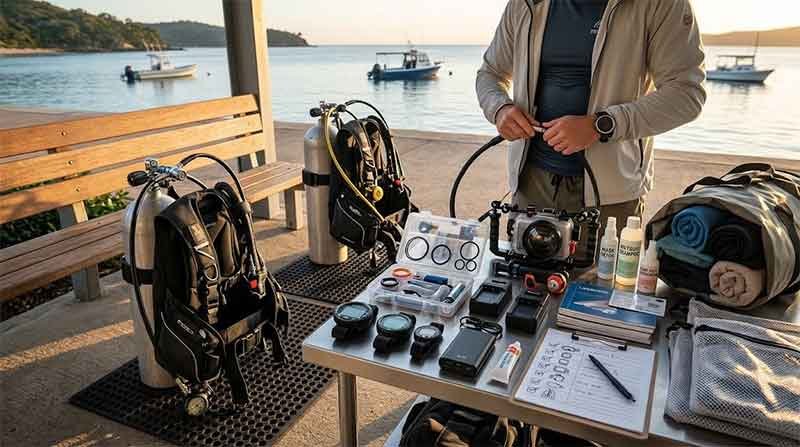
Prepare Your Dive Equipment
Well-maintained equipment reduces stress and allows you to focus on enjoying the dive.
Before your trip, inspect your:
- Regulator
- BCD
- Dive computer
- Mask
- Fins
- Wetsuit
- SMB
- Torch (if needed)
- Weights
- Tank connections
Test everything before your first dive whenever possible.
Bring spare items including:
- Mask strap
- Fin strap
- O-rings
- Mouthpiece
- Batteries
- Defog solution
Small spare parts can save an entire diving day.
Check Your Dive Computer Battery
Your dive computer is one of your most important safety tools.
Before leaving for your trip:
- Replace batteries if required.
- Update firmware if applicable.
- Verify settings.
- Confirm correct gas mix.
- Check altitude settings if necessary.
Never begin multiple dive days with a low battery warning.
Pack Efficiently
A well-organized dive bag makes each day easier.
Pack items such as:
- Certification card
- Logbook
- Dive insurance information
- Sunscreen
- Hat
- Sunglasses
- Reef-safe sunscreen
- Towel
- Dry clothes
- Reusable water bottle
- Snacks
- Motion sickness medication if needed
Having everything prepared reduces stress before each dive.
Protect Yourself from the Sun
Many diving destinations have strong tropical sunshine.
Divers often underestimate how much sun exposure they receive while spending hours on dive boats.
Protect yourself by using:
- Long-sleeve UV shirts
- Wide-brim hats
- Polarized sunglasses
- Reef-safe sunscreen
- Shade whenever available
Preventing sunburn also helps you stay comfortable throughout the trip.
Manage Motion Sickness
Boat travel can become tiring during multiple dive days.
If you are prone to seasickness:
- Eat light meals.
- Stay hydrated.
- Look toward the horizon.
- Choose the middle of the boat when possible.
- Discuss appropriate medication with a healthcare professional before your trip.
Managing motion sickness early prevents unnecessary fatigue.
Practice Good Buoyancy
Efficient buoyancy becomes increasingly important over several diving days.
Good buoyancy helps:
- Reduce air consumption.
- Protect marine life.
- Minimize physical effort.
- Improve underwater photography.
- Extend bottom time.
The less energy you expend underwater, the better you will feel after several dives.
Monitor Your Air Consumption
Many divers notice improved air consumption after several days because they become more relaxed.
Focus on:
- Slow breathing
- Proper trim
- Efficient fin kicks
- Calm movements
Avoid chasing marine life or swimming against strong currents unless necessary.
Listen to Your Body
One of the smartest things any diver can do is recognize when they need additional rest.
If you experience:
- Unusual fatigue
- Persistent headache
- Dizziness
- Illness
- Ear pain
- Sinus congestion
consider skipping a dive until you recover.
Missing one dive is far better than risking an injury or medical emergency.
Protect Your Ears
Multiple dives increase stress on your ears.
Equalize early and often during every descent.
Never force equalization if you feel discomfort.
After each dive:
- Allow your ears to dry.
- Avoid inserting objects into the ear canal.
- Monitor for pain or reduced hearing.
Healthy ears make consecutive dive days much more enjoyable.
Log Every Dive
Keeping an accurate dive log helps track your experience and equipment performance.
Record:
- Dive site
- Maximum depth
- Dive time
- Water temperature
- Visibility
- Weight used
- Air consumption
- Marine life observed
These records become valuable references for future trips.
Leave Enough Time Before Flying
One of the most important parts of multiple dive day planning is allowing enough surface time before air travel.
Most recreational diving guidelines recommend waiting at least:
- 18 hours after multiple dives before flying.
- Longer if recommended by your dive computer or dive professional.
Never rush directly from your final dive to the airport.
Mental Preparation Is Equally Important
Multiple diving days can be exciting, but staying mentally prepared is just as important as physical preparation.
Attend every dive briefing carefully.
Review:
- Entry procedures
- Exit procedures
- Emergency plans
- Hand signals
- Maximum depth
- Dive route
- Buddy procedures
A calm, prepared diver usually enjoys every dive more than someone who rushes into the water.
Environmental Responsibility
Preparing for multiple dive days also means protecting the underwater world you came to enjoy.
Practice responsible diving by:
- Maintaining neutral buoyancy.
- Never touching coral.
- Avoiding contact with marine animals.
- Securing dangling equipment.
- Picking up litter when safe to do so.
- Following local conservation rules.
Responsible divers help preserve dive sites for future generations.
Final Thoughts
How to Prepare for Multiple Dive Days is about far more than packing scuba gear. Proper hydration, balanced nutrition, quality sleep, careful dive planning, equipment maintenance, and listening to your body all contribute to safer and more enjoyable diving. Every consecutive dive places additional demands on your body, but with thoughtful preparation you can remain comfortable, confident, and ready to fully appreciate every underwater experience.
Whether you are exploring coral reefs, deep walls, wrecks, or vibrant marine ecosystems, preparing ahead of time allows you to focus on what matters most—safe diving, unforgettable memories, and making the most of every dive throughout your trip.
Related Posts: