What to Do If You Panic Underwater Diving is an important topic for every scuba diver, from complete beginners to experienced underwater explorers. Panic underwater can happen unexpectedly due to stress, poor visibility, equipment concerns, strong currents, or simply feeling overwhelmed in an unfamiliar environment.
Knowing how to recognize the signs of panic and respond correctly can help prevent accidents and make your diving experience safer and more enjoyable. Understanding what to do if you panic underwater diving can give you the confidence to stay calm and regain control when challenges arise beneath the surface.
Understanding Underwater Panic
Panic underwater is a sudden feeling of fear or anxiety that can cause a diver to react irrationally. Unlike on land, panic underwater can quickly become dangerous because breathing, buoyancy, and movement all require controlled actions.
Common symptoms of underwater panic include:
- Rapid breathing
- Increased heart rate
- Feeling trapped or unable to move
- Difficulty concentrating
- Strong urge to surface immediately
- Hyperventilation
- Loss of awareness of surroundings
Recognizing these warning signs early is the first step toward preventing a minor problem from becoming a serious emergency.
Common Causes of Panic While Diving
Understanding why panic occurs can help divers avoid triggering situations.
Lack of Experience
New divers may feel uncomfortable in unfamiliar underwater conditions. Limited experience can make small issues feel much bigger than they actually are.
Poor Visibility
Murky water, low light, or night diving can increase anxiety and create a sense of disorientation.
Equipment Problems
A leaking mask, regulator discomfort, tangled hoses, or buoyancy issues can cause stress if not addressed calmly.
Strong Currents
Unexpected currents may make divers feel as though they have lost control, leading to fear and panic.
Separation From a Dive Buddy
Not seeing your buddy immediately can cause anxiety, especially for less experienced divers.
Physical Exhaustion
Fatigue, dehydration, or seasickness before a dive can reduce a diver's ability to handle stressful situations.
Stay Still and Stop Moving
One of the most important things to do if you panic underwater diving is to stop moving.
Many divers instinctively swim harder when they become frightened. This often makes the situation worse because it increases oxygen consumption and raises stress levels.
Instead:
- Pause where you are
- Hold a stable position
- Focus on your breathing
- Avoid rapid movements
Simply stopping for a few moments can significantly reduce anxiety and help restore control.
Focus on Slow, Controlled Breathing
Breathing is the key to managing panic underwater.
When panic begins, divers often breathe rapidly and shallowly. This can lead to hyperventilation and increase feelings of fear.
To regain control:
- Take a slow breath in through your regulator.
- Exhale fully and steadily.
- Repeat the process several times.
- Concentrate only on your breathing rhythm.
A slow breathing pattern helps lower your heart rate and allows your mind to think more clearly.
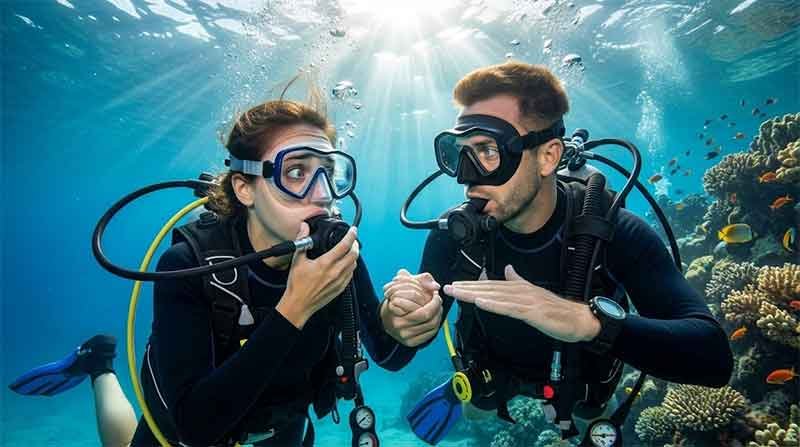
Signal Your Dive Buddy
Never try to hide your panic from your dive buddy.
If you feel overwhelmed:
- Make eye contact with your buddy.
- Use the standard "problem" signal.
- Stay close together.
- Allow your buddy to assist if necessary.
A calm and experienced dive buddy can provide reassurance and help you assess the situation more effectively.
Check Your Equipment
Once your breathing is under control, quickly assess your equipment.
Ask yourself:
- Is my regulator working properly?
- Is my mask secure?
- Is my air supply adequate?
- Is my buoyancy under control?
Many panic episodes are triggered by a small equipment issue that can often be fixed in seconds.
Remember Your Training
Scuba certification courses teach divers how to respond to underwater challenges safely.
During a stressful moment, remind yourself:
- You have training.
- You have equipment designed for safety.
- You have a dive buddy.
- Most diving problems have simple solutions.
Trusting your training can help replace fear with confidence.
Avoid a Rapid Emergency Ascent
One of the biggest dangers of underwater panic is the urge to rush to the surface.
Rapid ascents can lead to:
- Lung overexpansion injuries
- Decompression sickness
- Loss of buoyancy control
- Increased risk of injury
Unless there is an immediate life-threatening emergency, always ascend slowly and according to safe diving procedures.
Use a Controlled Ascent if Necessary
If you continue feeling uncomfortable after calming yourself, it may be best to end the dive.
A controlled ascent should include:
- Informing your dive buddy
- Maintaining a slow ascent rate
- Monitoring depth and buoyancy
- Making safety stops when appropriate
There is no shame in ending a dive early. Safety should always come first.
How Dive Leaders Can Help During a Panic Situation
Professional dive guides and instructors are trained to recognize signs of distress.
They may assist by:
- Establishing eye contact
- Signaling the diver to slow breathing
- Holding the diver's hand or arm for reassurance
- Adjusting buoyancy if needed
- Guiding the diver through a controlled ascent
Listening to your guide's instructions can make a significant difference during a stressful moment.
Techniques to Prevent Underwater Panic
Prevention is always better than managing a panic situation after it starts.
Get Proper Rest
Sleep deprivation can increase anxiety and reduce decision-making ability underwater.
Stay Hydrated
Dehydration affects both physical and mental performance during diving.
Dive Within Your Limits
Choose dive sites that match your certification level and experience.
Practice Skills Regularly
The more comfortable you are with basic diving skills, the less likely you are to panic when challenges arise.
Conduct Thorough Equipment Checks
Always inspect your gear before entering the water.
Communicate Before the Dive
Review hand signals, emergency procedures, and dive plans with your buddy.
Mental Strategies for Staying Calm Underwater
Building mental confidence can significantly reduce the likelihood of panic.
Useful strategies include:
- Visualizing a successful dive before entering the water
- Practicing relaxation techniques
- Taking slow breaths before descent
- Maintaining awareness of your surroundings
- Focusing on enjoying the underwater environment
Confidence grows with experience and preparation.
When to Seek Additional Training
If you have experienced panic underwater more than once, consider taking additional diving courses.
Advanced training can help improve:
- Buoyancy control
- Navigation skills
- Stress management
- Emergency response techniques
- Overall underwater confidence
Refresher courses can also be valuable if you have not dived for a long period.
Final Thoughts
Knowing what to do if you panic underwater diving can help transform a potentially dangerous situation into a manageable one. The most important actions are to stop, breathe slowly, stay calm, and communicate with your dive buddy. Panic is something many divers experience at some point, and it does not mean you are a bad diver.
With proper training, preparation, and experience, you can learn to manage stress effectively and enjoy safe, confident dives. By understanding the causes of underwater panic and practicing preventative measures, divers can explore the underwater world with greater peace of mind and safety.
Related Posts: