
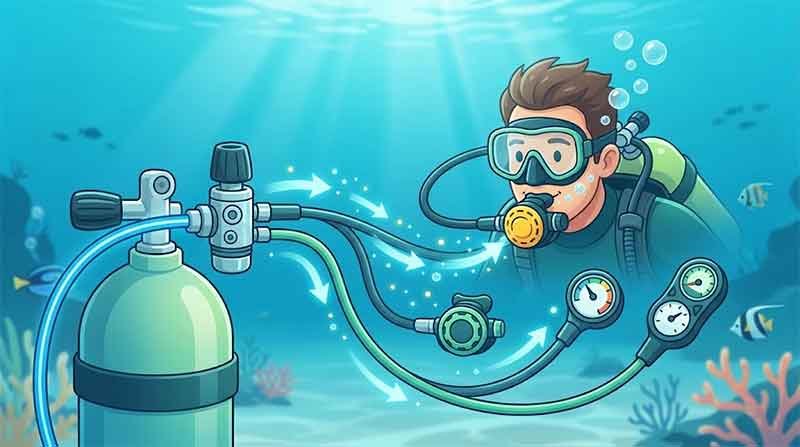
Regulators Explained for Beginners are an essential topic for anyone interested in scuba diving. A scuba regulator is one of the most important pieces of life-support equipment because it allows divers to breathe safely underwater by delivering air from the scuba tank at a breathable pressure.
Whether you are preparing for your first diving course or considering purchasing your own equipment, understanding how regulators work will help you make informed decisions, improve safety, and increase confidence beneath the surface.
This guide explains regulators in simple terms, covering their components, functions, maintenance, and tips for choosing the right regulator.
What Is a Scuba Regulator?
A scuba regulator is a device that reduces the extremely high pressure inside a scuba tank to a pressure that is safe and comfortable for breathing. Without a regulator, the compressed air inside the cylinder would be impossible to inhale safely.
Think of the regulator as a pressure management system. It continuously adjusts the air pressure in two stages before delivering it to the diver every time they inhale.
Modern scuba regulators are designed to provide smooth breathing at various depths, water temperatures, and diving conditions.
Why Is a Regulator Important?
The regulator is often considered the heart of your scuba setup because it directly affects your breathing underwater.
Benefits include:
- Delivers breathable air safely.
- Provides air only when you inhale.
- Maintains consistent airflow regardless of tank pressure.
- Includes backup air sources for emergencies.
- Connects essential accessories like pressure gauges and dive computers.
A properly functioning regulator helps reduce breathing effort, allowing divers to conserve energy and air during every dive.
How Does a Scuba Regulator Work?
Many beginners think air flows directly from the tank to their mouth, but the process is much more controlled.
First Stage
The first stage attaches directly to the scuba cylinder valve.
Its job is to reduce tank pressure, which may exceed 3,000 psi (200+ bar), down to an intermediate pressure.
The first stage automatically adjusts as tank pressure decreases during the dive, ensuring consistent airflow.
Second Stage
The second stage is the mouthpiece you breathe from.
When you inhale, a valve opens inside the second stage, allowing air to flow into your mouth. As soon as you stop inhaling, the valve closes automatically.
This demand-based system means air is only delivered when needed, preventing unnecessary air loss.
Alternate Air Source
Most scuba regulators include a second second-stage regulator, commonly called the octopus.
This bright-colored backup regulator is used during emergency air-sharing situations if another diver runs out of air.
Low-Pressure Inflator Hose
This hose connects your regulator to your Buoyancy Control Device (BCD).
It allows you to inflate or deflate your BCD underwater to maintain neutral buoyancy.
Pressure Gauge or Dive Computer
Most regulator systems connect to either:
- A submersible pressure gauge (SPG)
- An air-integrated dive computer
These instruments allow divers to monitor their remaining air supply throughout the dive.
The Two Main Types of First Stages
Piston Regulators
Piston regulators use a simple piston mechanism to reduce pressure.
Advantages include:
- Durable construction
- Excellent airflow
- Easy servicing
- Reliable performance
Many professional divers appreciate piston regulators for their simplicity and high performance.
Diaphragm Regulators
Diaphragm regulators use a flexible diaphragm instead of a piston.
Advantages include:
- Better protection against sand and debris
- Excellent cold-water performance
- Reduced internal contamination
- Popular among technical divers
Both types perform exceptionally well when properly maintained.
Balanced vs Unbalanced Regulators
Another common term beginners encounter is balanced versus unbalanced.
Balanced Regulators
Balanced regulators maintain nearly identical breathing performance regardless of:
- Tank pressure
- Depth
- Remaining air
Breathing feels smooth from the beginning to the end of the dive.
Unbalanced Regulators
Unbalanced regulators become slightly harder to breathe from as tank pressure decreases.
While still perfectly safe, they may require slightly more breathing effort near the end of a dive.
Most recreational divers today prefer balanced regulators because of their consistent performance.
DIN vs Yoke Regulators
Scuba regulators are available with two connection styles.
DIN
DIN regulators screw directly into the tank valve.
Advantages include:
- More secure connection
- Better for high-pressure tanks
- Less chance of accidental disconnection
- Common in Europe and technical diving
Yoke (A-Clamp)
Yoke regulators clamp over the tank valve.
Advantages include:
- Easy to attach
- Widely available at dive resorts
- Common in recreational diving
- Compatible with many rental cylinders
Many travelers choose yoke regulators because they are commonly supported worldwide, while DIN adapters make it possible to use both systems when needed.
Environmental Sealing
Some regulators are environmentally sealed.
This means the internal first-stage components are protected from:
- Saltwater
- Mud
- Sand
- Silt
- Ice formation
Environmental sealing helps improve durability and is especially valuable for divers exploring cold water or challenging environments.
Breathing Adjustment Features
Higher-end regulators often include additional adjustments.
Venturi Switch
The Venturi switch helps control airflow.
It can reduce free-flowing at the surface and improve breathing underwater.
Breathing Resistance Adjustment
Some regulators allow divers to adjust inhalation resistance.
This lets experienced divers customize breathing comfort depending on conditions and personal preference.
Common Regulator Hoses
A complete regulator setup usually includes several hoses.
These typically connect to:
- Primary second stage
- Alternate second stage
- Pressure gauge
- BCD inflator
Some advanced divers customize hose lengths for improved streamlining and comfort.
Signs Your Regulator Needs Service
Never ignore signs that something may be wrong.
Watch for:
- Continuous air leaks
- Bubbling around fittings
- Free-flowing air
- Difficulty breathing
- Sticky purge button
- Cracked hoses
- Damaged mouthpiece
If you notice any of these problems, stop using the regulator until it has been inspected by a qualified technician.
Related: How to Pack Dive Gear for Travel
How Often Should Regulators Be Serviced?
Most manufacturers recommend professional servicing approximately once every year or after a certain number of dives, depending on the brand and usage.
Regular servicing includes:
- Replacing O-rings
- Cleaning internal components
- Inspecting springs and valves
- Pressure adjustments
- Performance testing
Always follow the maintenance schedule recommended by your regulator's manufacturer.
Daily Care After Diving
Simple maintenance greatly extends regulator life.
After every dive:
- Rinse thoroughly with fresh water.
- Keep the dust cap dry before attaching.
- Avoid pressing the purge button unless the regulator is pressurized or the inlet is protected.
- Allow the regulator to dry naturally.
- Store in a cool, dry location.
- Avoid direct sunlight for long periods.
- Never lift scuba tanks using the regulator.
Good habits help prevent corrosion and premature wear.
Choosing Your First Regulator
Beginners often wonder whether they need the most expensive regulator available.
In most cases, a reliable mid-range regulator from a reputable manufacturer provides excellent performance.
When choosing your first regulator, consider:
- Ease of breathing
- Service availability in your area
- Weight for travel
- Environmental sealing if diving in cold water
- Balanced first stage
- Balanced second stage
- Comfortable mouthpiece
- Warranty
- Availability of spare parts
Buying from an authorized dealer also ensures proper setup and future servicing support.
Travel Considerations
If you travel frequently for diving vacations, lightweight regulators can reduce luggage weight.
Travel-friendly features include:
- Compact first stages
- Flexible braided hoses
- Lightweight second stages
- Protective travel cases
Frequent travelers should also verify compatibility with the tank valve systems commonly used at their destinations.
Common Beginner Mistakes
New divers sometimes make avoidable mistakes when using regulators.
Examples include:
- Forgetting to check for leaks before diving.
- Breathing too rapidly.
- Dragging the regulator across rough surfaces.
- Skipping annual servicing.
- Storing equipment while still wet.
- Ignoring damaged mouthpieces.
- Not practicing alternate air source drills.
Proper training and regular equipment inspections help prevent these issues.
Related: Wetsuit Thickness Guide for Bali
Frequently Asked Questions
Can I Use Any Regulator with Any Tank?
Most regulators are compatible with standard scuba cylinders, provided the connection type matches the tank valve or an appropriate adapter is used.
Why Is Breathing Easier with Some Regulators?
Higher-quality regulators often have balanced designs and advanced airflow systems that reduce breathing effort, especially at greater depths.
Can Regulators Freeze?
In very cold water, regulators can freeze if not designed for those conditions. Environmentally sealed regulators are generally better suited for cold-water diving.
Should Beginners Buy or Rent?
Renting is ideal for occasional divers or those just starting out. Purchasing a regulator becomes a worthwhile investment if you dive regularly, as it offers familiarity, comfort, and confidence with your own equipment.
Related: How to Log Your Dives Properly
Conclusion
Understanding Regulators Explained for Beginners is one of the most valuable steps toward becoming a confident and safe scuba diver. Your regulator transforms high-pressure air from your scuba tank into breathable air with every inhale, making it one of the most critical components of your diving equipment.
By learning how first and second stages work, understanding the differences between balanced and unbalanced systems, choosing the right connection type, and following proper maintenance practices, you'll be better prepared for every underwater adventure. Whether you rent equipment or purchase your own regulator, proper care and regular servicing will help ensure reliable performance and many years of enjoyable diving.