
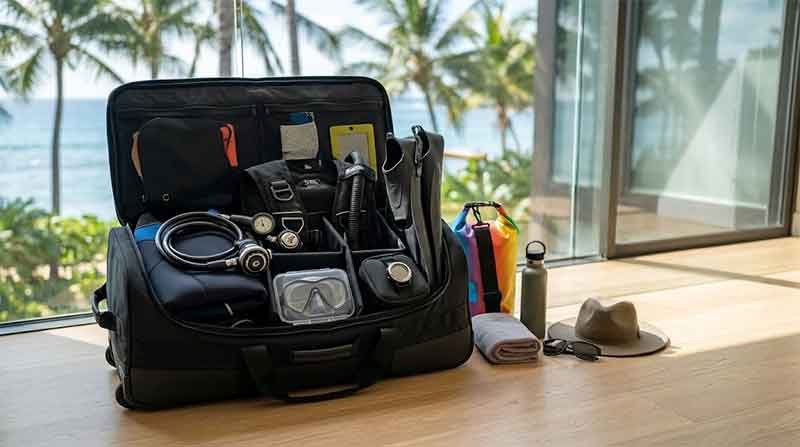
How to Pack Dive Gear for Travel is one of the most important skills every scuba diver should master before heading to their next underwater adventure. Whether you're planning a tropical dive vacation in Bali, the Maldives, Egypt, or the Caribbean, packing your scuba equipment properly protects your investment, prevents damage during transit, and ensures you arrive ready to dive.
From fragile dive computers to bulky BCDs and regulators, every piece of equipment deserves careful preparation. This guide explains everything you need to know about packing dive gear efficiently, safely, and within airline baggage limits.
Why Packing Dive Gear Properly Matters
Scuba equipment is not only expensive but also precision-engineered. Rough baggage handling, moisture, poor organization, and excessive weight can lead to damaged equipment or unnecessary airline fees.
Proper packing helps you:
- Protect delicate dive equipment.
- Reduce airline baggage charges.
- Keep equipment organized.
- Speed up airport security checks.
- Prevent forgotten essentials.
- Extend the lifespan of your gear.
- Make unpacking at your dive destination much easier.
Spending a little extra time packing can save hundreds or even thousands of dollars in damaged equipment.
Choose the Right Dive Bag
The foundation of successful dive travel begins with selecting an appropriate dive bag.
Roller Dive Bags
Roller bags are ideal for international travel because they reduce the effort of carrying heavy equipment.
Advantages include:
- Large storage capacity
- Easy transportation through airports
- Better weight distribution
- Durable construction
Backpack Dive Bags
Backpack-style dive bags work well for liveaboards or destinations requiring walking between boats and accommodations.
Benefits include:
- Hands-free carrying
- Lightweight materials
- Comfortable shoulder straps
- Easier mobility on uneven terrain
Duffel Dive Bags
Soft-sided duffel bags are lighter than hard cases, helping reduce total baggage weight while still providing enough space for most recreational dive gear.
Know Airline Baggage Rules
Before packing, check your airline's baggage policy.
Pay attention to:
- Maximum checked baggage weight
- Carry-on weight limits
- Size restrictions
- Extra baggage fees
- Sports equipment allowances
Some airlines treat scuba equipment as sporting goods, which may provide more generous baggage allowances.
Weigh your luggage at home before leaving to avoid unexpected airport charges.
Create a Dive Gear Packing Checklist
A checklist prevents forgotten equipment.
Typical scuba packing list includes:
Personal Dive Equipment
- Mask
- Snorkel
- Fins
- Dive boots
- Wetsuit
- Gloves (if needed)
- Hood (if needed)
Life Support Equipment
- BCD
- Regulator
- Alternate air source
- SPG
- Dive computer
- Compass
Accessories
- Surface marker buoy (SMB)
- Reel or spool
- Dive light
- Backup flashlight
- Slate
- Cutting tool
- Save-a-dive kit
Documentation
- Certification card
- Logbook
- Dive insurance
- Passport
- Travel insurance
- Booking confirmations
Clean Equipment Before Packing
Always rinse your dive gear thoroughly with fresh water after your last dive before traveling home or preparing for another destination.
Salt crystals can:
- Damage zippers
- Cause corrosion
- Create unpleasant odors
- Shorten equipment lifespan
Allow every piece of equipment to dry completely before packing.
Packing wet gear can encourage mold and mildew.
Protect Your Regulator
Your regulator is one of the most delicate and expensive pieces of scuba equipment.
Best Practices
- Place it inside a padded regulator bag.
- Cover dust caps securely.
- Coil hoses loosely.
- Never sharply bend hoses.
- Position it in the center of your luggage.
- Surround it with soft clothing.
Many experienced divers carry regulators inside their carry-on luggage whenever possible.
Related: Best Underwater Cameras for Bali
Carry Your Dive Computer in Hand Luggage
Dive computers contain sensitive electronics.
Carrying them onboard helps reduce the risk of:
- Impact damage
- Theft
- Lost baggage
Remove the battery if recommended by the manufacturer for extended travel.
Store the dive computer inside its protective case.
Pack Your Mask Carefully
A scratched mask lens can ruin an otherwise perfect dive vacation.
Protect your mask by:
- Using a hard protective mask box.
- Wrapping it in soft clothing.
- Never placing heavy objects directly on top.
Many divers pack their mask in carry-on luggage alongside their regulator.
Protect Your Fins
Fins are generally durable but can become bent if packed incorrectly.
Tips include:
- Place fins along both sides of your suitcase.
- Insert smaller gear inside full-foot fins.
- Keep fin straps relaxed.
- Avoid excessive pressure on blade tips.
Long freediving fins may require oversized luggage.
Fold Your Wetsuit Properly
Avoid creating permanent creases.
Instead:
- Roll the wetsuit loosely.
- Place it on top of heavier equipment.
- Avoid compressing it excessively.
Rolling also saves space and minimizes wrinkles.
Secure Your BCD
Your buoyancy compensator is bulky but lightweight.
Before packing:
- Empty all air.
- Drain remaining water.
- Fold shoulder straps inward.
- Place soft items inside the BCD to maximize space.
Examples include:
- Rash guards
- T-shirts
- Towels
- Socks
This technique improves packing efficiency.
Organize Small Accessories
Small items often disappear inside large bags.
Use zippered mesh pouches for:
- O-rings
- Batteries
- Charging cables
- Clips
- Bolts
- Mask straps
- Silicone grease
- Dive tools
Label each pouch for faster organization.
Separate Wet and Dry Items
Carry waterproof dry bags for returning home with wet equipment.
This prevents:
- Damp clothing
- Musty odors
- Water damage to electronics
- Cross-contamination inside luggage
Reusable waterproof bags are inexpensive and extremely useful.
Use Clothing as Padding
Instead of carrying extra protective materials, use your clothing.
Wrap:
- Regulator
- Dive computer case
- Camera housing
- Lights
inside:
- T-shirts
- Hoodies
- Towels
- Swimwear
This saves space while providing excellent cushioning.
Protect Underwater Cameras
If traveling with underwater photography equipment:
- Remove batteries if necessary.
- Use padded camera inserts.
- Protect ports with covers.
- Store memory cards separately.
- Never place heavy equipment on camera housings.
Expensive camera systems should ideally travel in carry-on baggage.
Pack Rechargeable Batteries Safely
Many airlines require lithium batteries to travel in carry-on luggage.
Before flying:
- Check airline regulations.
- Cover battery terminals.
- Store batteries individually.
- Bring chargers.
Never pack damaged batteries.
Balance Weight Throughout the Bag
Avoid placing all heavy equipment in one corner.
Distribute weight evenly.
Heaviest items should sit close to the wheels if using roller luggage.
Balanced luggage reduces stress on bag handles and improves maneuverability.
Leave Space for Souvenirs
Many divers purchase:
- Dive apparel
- Local handicrafts
- Accessories
- Spare equipment
Packing your luggage completely full before departure may create problems for the return trip.
Leave 10–20% free space whenever possible.
Carry Essential Dive Gear Onboard
If baggage becomes delayed, carrying essential equipment allows you to continue diving after renting only the larger items.
Recommended carry-on items include:
- Mask
- Dive computer
- Regulator
- Certification card
- Logbook
- Prescription mask (if applicable)
These items are difficult or inconvenient to replace immediately.
Perform a Final Equipment Check
Before closing your luggage, verify:
- All zippers work properly.
- Regulators are protected.
- Dust cap is secure.
- Dive computer is packed.
- Chargers are included.
- Passport is accessible.
- Certification cards are packed.
- Medications are included.
- Spare O-rings are packed.
- Travel documents are ready.
A five-minute inspection can prevent major inconveniences later.
Common Packing Mistakes to Avoid
Many divers make avoidable mistakes during travel.
These include:
- Packing wet equipment.
- Exceeding airline weight limits.
- Forgetting charging cables.
- Leaving batteries inside lights without checking airline rules.
- Packing fragile items without protection.
- Not labeling luggage.
- Forgetting spare mask straps.
- Bringing unnecessary equipment.
- Ignoring airline baggage policies.
- Packing expensive electronics in checked luggage.
Learning from these mistakes makes every future dive trip smoother.
Tips for International Dive Travel
International diving trips often involve multiple flights, transfers, and boat rides.
Helpful travel tips include:
- Use luggage tags inside and outside your bag.
- Take photos of your packed equipment for insurance purposes.
- Keep copies of important documents online.
- Purchase travel insurance that covers dive equipment.
- Arrive early at airports when traveling with sports gear.
- Keep essential medications in your carry-on.
- Bring universal power adapters for charging electronics.
- Pack lightweight clothing to offset the weight of dive equipment.
Good preparation reduces stress and helps you focus on enjoying your dives.
Related: Dive Computers for Beginners
Conclusion
Knowing How to Pack Dive Gear for Travel can make the difference between a smooth diving holiday and one filled with unnecessary stress. Careful packing protects your expensive scuba equipment, helps you stay within airline baggage limits, and ensures everything arrives in excellent condition. By selecting the right dive bag, protecting delicate gear like regulators and dive computers, organizing accessories, and following airline regulations, you can travel confidently to any diving destination.
Whether you're exploring vibrant coral reefs, historic wrecks, or encounters with large marine life, proper packing ensures your adventure begins the moment you arrive, with all your equipment ready for safe and enjoyable diving.