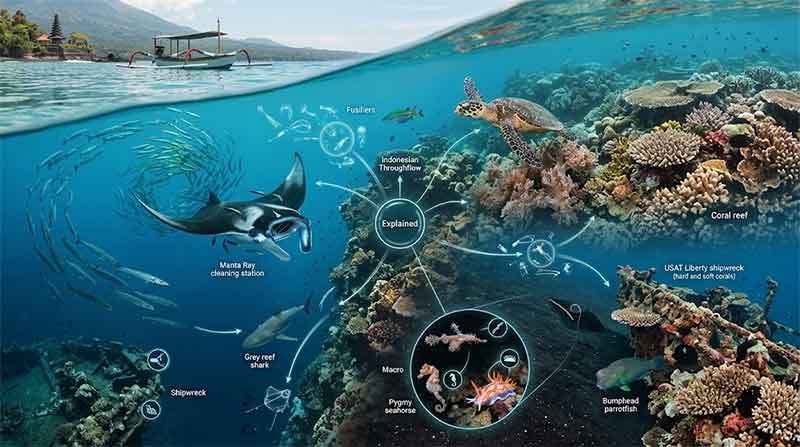
Bali Underwater Ecosystems Explained is essential reading for anyone interested in discovering why Bali is one of the world's premier diving and snorkeling destinations.
Beneath the island's crystal-clear waters lies a remarkable collection of marine habitats that support thousands of species of fish, corals, turtles, rays, sharks, crustaceans, and microscopic organisms.
From colorful coral reefs and volcanic seabeds to seagrass meadows and deep ocean drop-offs, Bali offers incredible biodiversity that attracts marine enthusiasts, underwater photographers, conservationists, and scuba divers from across the globe.
Understanding these underwater ecosystems helps visitors appreciate the importance of protecting Bali's marine environment for future generations.
Why Bali Has Such Rich Marine Biodiversity
Bali sits within the Coral Triangle, often referred to as the "Amazon of the Seas." This region contains the highest marine biodiversity on Earth, with an extraordinary concentration of coral species, reef fish, mollusks, and marine invertebrates.
Several natural factors contribute to Bali's thriving underwater ecosystems:
- Warm tropical waters year-round
- Nutrient-rich ocean currents
- Volcanic coastline creating diverse habitats
- Healthy coral reef systems
- Seasonal upwellings that bring cooler, nutrient-rich water
- Connections between the Indian Ocean and Indonesian seas
These conditions allow countless marine species to flourish in relatively small geographic areas.
The Main Types of Underwater Ecosystems Around Bali
Bali's underwater world consists of several interconnected ecosystems, each playing a unique role in maintaining marine life.
Coral Reefs
Coral reefs are the most recognizable underwater ecosystem in Bali.
Although corals resemble colorful rocks, they are actually living animals called coral polyps. Over hundreds and thousands of years, these tiny organisms build massive reef structures that become homes for thousands of marine species.
Healthy coral reefs provide:
- Shelter for reef fish
- Breeding grounds
- Food sources
- Protection from predators
- Coastal erosion control
Popular coral reef destinations include Tulamben, Menjangan Island, Padang Bai, Nusa Penida, Amed, and Pemuteran.
Volcanic Reef Systems
Unlike many tropical destinations, Bali's volcanic history has created unique underwater landscapes.
Ancient lava flows formed dramatic underwater terrain including:
- Black sand slopes
- Lava ridges
- Rocky pinnacles
- Underwater cliffs
- Boulders covered in coral
These environments provide excellent habitats for macro marine life including nudibranchs, frogfish, octopus, shrimp, and seahorses.
Seagrass Meadows
Seagrass often receives less attention than coral reefs but is equally important.
These underwater flowering plants provide habitat and food for numerous marine animals including:
- Green turtles
- Sea horses
- Juvenile fish
- Crabs
- Sea cucumbers
- Dugongs in some Indonesian waters
Seagrass also improves water quality by trapping sediments and absorbing carbon dioxide.
Sandy Bottom Ecosystems
Large sandy areas beneath the sea may appear empty at first glance, but they are surprisingly alive.
Black volcanic sand especially supports unusual marine creatures including:
- Mimic octopus
- Blue-ringed octopus
- Ghost pipefish
- Bobtail squid
- Garden eels
- Stargazers
Macro photographers particularly enjoy these habitats because many rare creatures camouflage perfectly against the sand.
Artificial Reefs and Shipwreck Ecosystems
Artificial reefs have become valuable additions to Bali's marine environment.
Sunken ships, reef restoration structures, and underwater sculptures eventually become colonized by marine organisms.
Over time they support:
- Hard corals
- Soft corals
- Sponges
- Sea fans
- Reef fish
- Moray eels
- Schools of jackfish
One famous example is the USAT Liberty Shipwreck, where decades of coral growth have transformed a historic wreck into a thriving underwater ecosystem.
The Coral Reef Food Chain
Every underwater ecosystem depends on a balanced food web.
The process begins with microscopic organisms called phytoplankton, which use sunlight for photosynthesis.
The simplified food chain includes:
- Phytoplankton
- Zooplankton
- Small fish
- Medium predators
- Large reef predators
- Apex predators such as reef sharks
Each level supports the next, creating a balanced marine environment.
Coral Reef Symbiosis
One fascinating feature of Bali's reefs is the relationship between different marine species.
Coral and Zooxanthellae
Tiny algae called zooxanthellae live inside coral tissue.
The algae produce energy through sunlight, while corals provide protection and nutrients.
Without this partnership, coral reefs could not survive.
Cleaner Fish
Cleaner wrasses establish "cleaning stations" where larger fish voluntarily stop to have parasites removed.
Both species benefit, making this one of nature's best examples of mutualism.
Clownfish and Sea Anemones
Clownfish live safely among the tentacles of sea anemones.
The fish gain protection while helping keep the anemone clean and defending it from certain predators.
Coral Species Found Around Bali
Divers can encounter numerous coral varieties including:
- Staghorn coral
- Brain coral
- Table coral
- Mushroom coral
- Plate coral
- Finger coral
- Boulder coral
- Soft corals
- Leather corals
- Sea fans
Each coral species contributes differently to reef complexity and biodiversity.
Marine Animals Supported by Bali's Ecosystems
Healthy underwater ecosystems support an astonishing variety of marine life.
Common reef residents include:
- Butterflyfish
- Angelfish
- Surgeonfish
- Triggerfish
- Damselfish
- Bannerfish
- Sweetlips
- Groupers
- Snappers
- Parrotfish
Larger marine animals include:
- Green sea turtles
- Hawksbill turtles
- Reef sharks
- Bamboo sharks
- Eagle rays
- Blue-spotted stingrays
- Manta rays
- Ocean sunfish (Mola Mola)
- Dolphins
Macro marine life includes:
- Nudibranchs
- Frogfish
- Seahorses
- Pipefish
- Shrimp
- Crabs
- Octopus
- Cuttlefish
- Leaf scorpionfish
Seasonal Changes in Bali's Underwater Ecosystems
Marine ecosystems change throughout the year.
During certain months, nutrient-rich upwellings bring cooler water from the deep ocean.
These seasonal changes:
- Increase plankton production
- Attract larger pelagic fish
- Improve feeding opportunities
- Bring Mola Mola closer to divers
- Influence coral growth patterns
Different seasons offer unique underwater experiences.
The Importance of Coral Reefs for Coastal Communities
Healthy reefs provide much more than beautiful dive sites.
Benefits include:
- Supporting local fisheries
- Protecting coastlines from waves
- Creating tourism jobs
- Supporting biodiversity
- Improving water quality
- Helping scientific research
- Generating sustainable income for communities
Many families throughout Bali depend directly or indirectly on healthy marine ecosystems.
Threats Facing Bali's Underwater Ecosystems
Although many reefs remain healthy, several environmental challenges continue to affect marine habitats.
Major threats include:
Climate Change
Increasing ocean temperatures can cause coral bleaching, where corals lose the algae that provide their energy.
Repeated bleaching events reduce coral survival rates.
Plastic Pollution
Marine debris can smother reefs, entangle wildlife, and introduce harmful microplastics into the food chain.
Unsustainable Fishing
Illegal fishing methods and overfishing disrupt ecosystem balance and reduce fish populations.
Coastal Development
Poorly managed coastal construction can increase sedimentation, reducing sunlight available for coral growth.
Careless Tourism
Touching corals, standing on reefs, feeding fish, or improper anchoring can damage fragile ecosystems that may take decades to recover.
Marine Conservation Efforts in Bali
Numerous conservation projects are helping protect Bali's underwater ecosystems.
These include:
- Coral reef restoration
- Artificial reef installation
- Marine protected areas
- Community education
- Sustainable tourism programs
- Beach cleanups
- Scientific monitoring
- Coral nursery projects
Many dive operators also promote environmentally responsible diving practices.
How Divers Can Help Protect Marine Ecosystems
Every diver and snorkeler can contribute to conservation.
Simple actions include:
- Maintain good buoyancy control.
- Never touch or collect coral.
- Avoid chasing marine animals.
- Use reef-safe sunscreen when possible.
- Do not feed fish.
- Reduce single-use plastics.
- Support environmentally responsible dive operators.
- Participate in underwater clean-up events.
Small actions by thousands of visitors can make a significant positive impact.
Why Bali Is an Excellent Destination for Marine Education
Bali is not only a spectacular diving destination but also an outstanding place to learn about marine ecology.
Students, photographers, marine biologists, and recreational divers can observe diverse ecosystems within relatively short travel distances. One day may involve exploring volcanic macro habitats, while the next includes vibrant coral walls or drifting alongside manta rays.
This remarkable variety makes Bali one of the most educational underwater destinations in Southeast Asia.
Conclusion
Bali's underwater ecosystems represent one of the richest marine environments on the planet. Coral reefs, volcanic seabeds, seagrass meadows, sandy slopes, and artificial reefs work together to support an extraordinary diversity of marine life. From tiny nudibranchs and colorful reef fish to majestic manta rays and the elusive Mola Mola, every species depends on healthy habitats and balanced ecosystems.
By understanding how these underwater environments function and supporting responsible tourism and conservation efforts, divers and visitors can help preserve Bali's incredible marine heritage for generations to come. Whether you are planning your first snorkeling adventure or an advanced scuba diving expedition, exploring Bali's underwater ecosystems offers an unforgettable glimpse into one of nature's greatest treasures.
Related Posts: