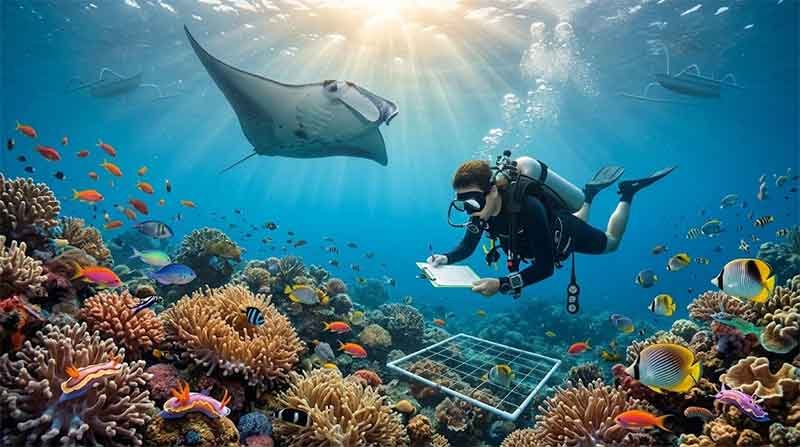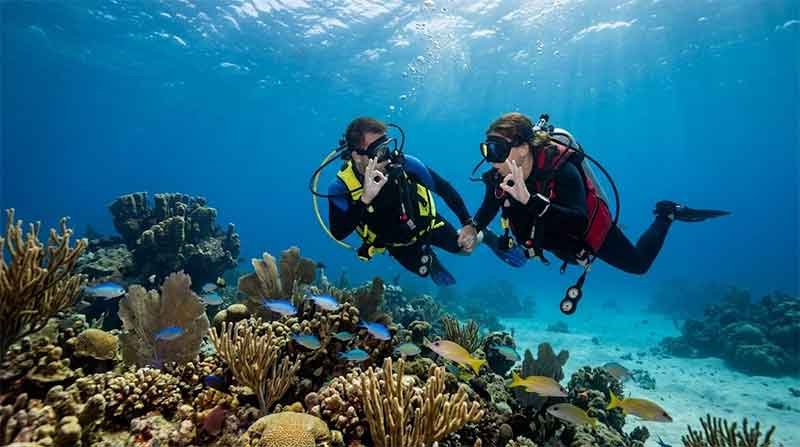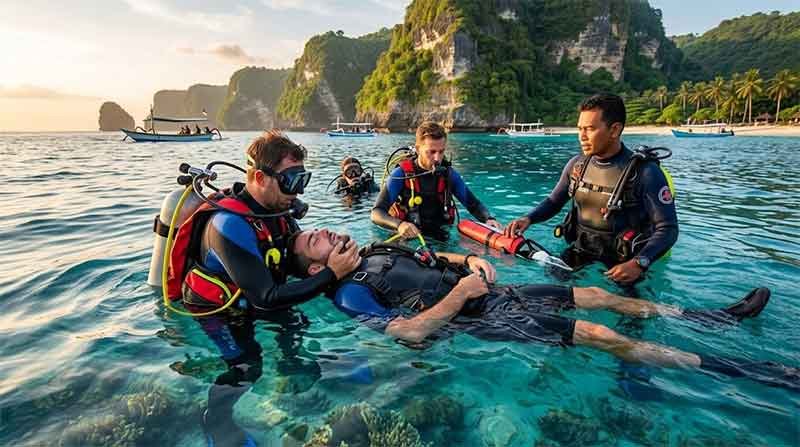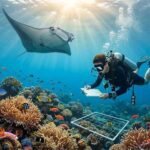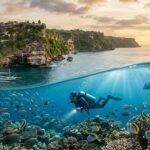
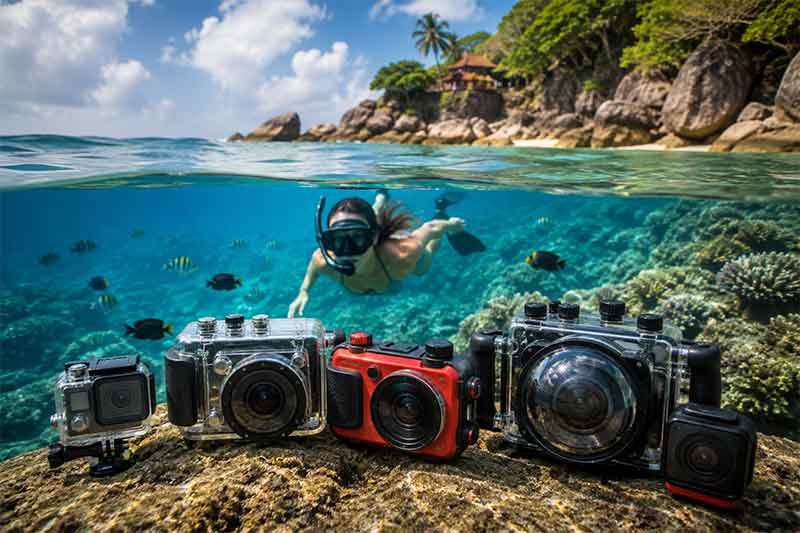
Best Underwater Cameras for Bali are essential for capturing the island's incredible marine biodiversity, colorful coral reefs, dramatic underwater landscapes, and unforgettable encounters with manta rays, sea turtles, reef sharks, and the famous mola mola.
Whether you are a beginner taking your first scuba diving course or an experienced underwater photographer searching for professional-quality images, choosing the right underwater camera can make every dive more rewarding.
Bali offers excellent visibility, warm tropical waters, and world-class dive sites like Tulamben, Nusa Penida, Padang Bai, Amed, and Menjangan Island, making it one of the best places in the world to practice underwater photography.
The ideal underwater camera depends on your diving experience, photography goals, budget, and how much equipment you are comfortable carrying. Some divers want a lightweight action camera that records amazing videos, while others prefer advanced mirrorless systems capable of producing magazine-quality images. This guide explains the best underwater camera options, important features to consider, recommended accessories, and practical tips specifically for diving in Bali.
Why Bali Is Perfect for Underwater Photography
Bali is recognized as one of Southeast Asia's top diving destinations because it offers an enormous variety of underwater subjects within relatively short travel distances.
Popular photography opportunities include:
- Colorful coral gardens
- Manta rays
- Sea turtles
- Reef sharks
- Mola mola (Ocean Sunfish)
- Nudibranchs
- Pygmy seahorses
- Frogfish
- Ghost pipefish
- Soft corals
- Artificial reefs
- Historic shipwrecks
- Macro marine life
Different dive locations provide different photography opportunities.
Tulamben
Tulamben is famous for:
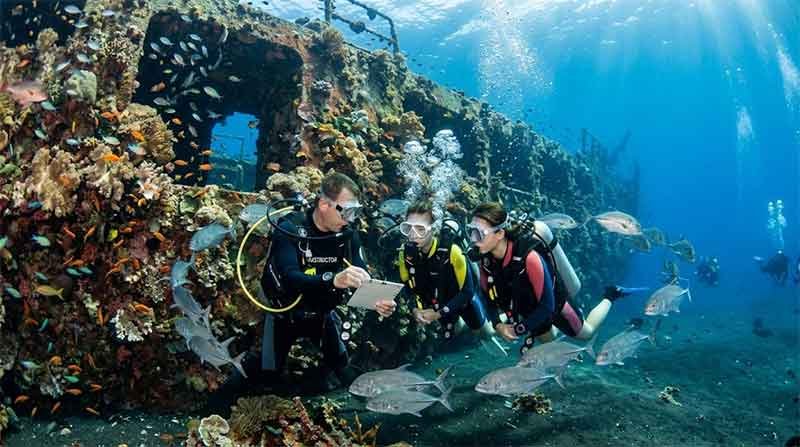
- USAT Liberty Shipwreck
- Calm conditions
- Easy shore diving
- Excellent macro photography
- Wide-angle wreck photography
This location is ideal for beginners and professionals alike.
Nusa Penida
Nusa Penida offers:
- Giant manta rays
- Mola mola (seasonal)
- Crystal clear blue water
- Dramatic reef walls
- Strong currents
Wide-angle photography performs best here.
Padang Bai
Padang Bai is known for:
- Macro life
- Blue Ring Octopus
- Leaf Scorpionfish
- Rhinopias
- Frogfish
- Soft corals
Macro photographers especially love this destination.
Menjangan Island
Menjangan features:
- Excellent visibility
- Massive coral walls
- Healthy reefs
- Schooling fish
- Calm conditions
Perfect for both photography and videography.
What Makes a Great Underwater Camera?
Not every waterproof camera is suitable for scuba diving.
The best underwater cameras should include:
- Excellent image quality
- Fast autofocus
- Strong battery life
- RAW image support
- Good low-light performance
- Reliable waterproof housing
- Easy controls underwater
- Image stabilization
- High-resolution video
- Wide lens compatibility
These features become even more important when diving deeper than recreational snorkeling depths.
Action Cameras
Action cameras remain the most popular choice among recreational divers.
Advantages include:
- Compact size
- Lightweight
- Easy to travel with
- Excellent video quality
- Electronic image stabilization
- Affordable underwater housings
These cameras are perfect for:
- Dive vacations
- Beginner photographers
- Travel bloggers
- YouTube creators
- Social media content
However, action cameras generally have smaller sensors, making them less suitable for professional still photography.
Compact Underwater Cameras
Compact cameras provide a significant upgrade over action cameras.
Benefits include:
- Better image quality
- Optical zoom
- Manual controls
- RAW photography
- Larger sensors
- Better low-light performance
Many underwater photographers start with compact cameras before upgrading to mirrorless systems.
Mirrorless Cameras
Mirrorless cameras have become the preferred choice for professional underwater photographers.
Advantages include:
- Large image sensors
- Interchangeable lenses
- Outstanding autofocus
- High dynamic range
- Professional image quality
- Excellent video capabilities
These cameras work exceptionally well for:
- Wide-angle photography
- Macro photography
- Professional publications
- Commercial photography
Although more expensive, they offer the highest quality results.
DSLR Cameras
DSLR cameras still produce incredible underwater photographs.
Benefits include:
- Outstanding image quality
- Large lens selection
- Excellent durability
- Professional performance
However, DSLR systems tend to be:
- Larger
- Heavier
- More expensive
- Harder to travel with
Many underwater photographers are now transitioning to mirrorless systems due to their smaller size.
Important Camera Features for Bali Diving
Good Low-Light Performance
As depth increases, natural sunlight decreases dramatically.
A camera with strong low-light capability helps preserve:
- Color
- Sharpness
- Detail
- Contrast
This becomes especially useful around wrecks and deeper reefs.
Fast Autofocus
Marine life rarely waits for photographers.
Fast autofocus helps capture:
- Swimming turtles
- Manta rays
- Schooling fish
- Reef sharks
- Dolphins
A slow autofocus system often results in missed opportunities.
RAW Image Capture
RAW files preserve far more image data than JPEG.
Advantages include:
- Better color correction
- Improved white balance
- Greater editing flexibility
- More detail recovery
Most serious underwater photographers shoot exclusively in RAW format.
Image Stabilization
Water movement constantly affects camera stability.
Good stabilization improves:
- Video smoothness
- Sharpness
- Low-light shooting
- Handheld photography
This feature is especially valuable during drift dives around Nusa Penida.
Essential Underwater Camera Accessories
A camera alone is only part of an underwater photography system.
Recommended accessories include:
Waterproof Housing
Always use a housing specifically designed for your camera model.
Quality housings provide:
- Reliable waterproof seals
- Comfortable controls
- Leak protection
- Access to all camera settings
Underwater Strobes
Water absorbs colors very quickly.
Strobes restore:
- Red tones
- Orange colors
- Natural skin tones
- Coral colors
Professional underwater images almost always use external lighting.
Video Lights
Continuous lights improve:
- Video quality
- Macro photography
- Night dives
- Focus accuracy
Modern LED lights are compact yet extremely powerful.
Wide-Angle Lenses
Wide-angle lenses are ideal for photographing:
- Shipwrecks
- Manta rays
- Coral reefs
- Schools of fish
- Divers
They also reduce the amount of water between the lens and the subject, improving image clarity.
Macro Lenses
Macro lenses allow photographers to capture tiny marine creatures.
Popular subjects include:
- Nudibranchs
- Shrimp
- Seahorses
- Blennies
- Crabs
- Tiny octopus species
Padang Bai and Tulamben are famous macro photography destinations.
Tips for Better Underwater Photography in Bali
Get Close
Water reduces image sharpness.
Move closer to your subject whenever possible rather than relying on digital zoom.
Shoot Upward
Photographing slightly upward creates:
- Blue water backgrounds
- Better lighting
- Stronger contrast
- More dramatic compositions
Control Your Buoyancy
Excellent buoyancy control is one of the biggest factors in successful underwater photography.
Good buoyancy helps you:
- Stay stable
- Protect coral reefs
- Avoid disturbing marine life
- Capture sharper images
Respect Marine Life
Never:
- Chase turtles
- Touch coral
- Move marine animals
- Feed fish
- Harass manta rays
Responsible photography protects Bali's underwater ecosystem.
Watch Your Air Supply
Photography can become distracting.
Regularly check:
- Air pressure
- Depth
- Dive computer
- Dive buddy
- No-decompression limits
Safety should always remain the highest priority.
Camera Settings for Bali Diving
While settings vary by conditions, many underwater photographers begin with:
Wide-Angle Photography
- Lower ISO
- Faster shutter speed
- Mid-range aperture
- Continuous autofocus
These settings help freeze larger marine animals.
Macro Photography
Macro photography often benefits from:
- Smaller aperture
- Low ISO
- External strobes
- Manual focus adjustments when necessary
Patience is often more important than expensive equipment.
Caring for Your Underwater Camera
Saltwater can damage equipment if it is not cleaned properly.
After every dive:
- Rinse thoroughly in fresh water
- Dry with a soft towel
- Remove the housing carefully
- Inspect O-rings
- Recharge batteries
- Backup photos immediately
Regular maintenance greatly extends the life of underwater camera equipment.
Is an Expensive Camera Necessary?
Not necessarily.
Many divers capture stunning underwater memories using compact cameras or action cameras.
Factors that often matter more than price include:
- Proper buoyancy
- Good lighting
- Understanding composition
- Patience
- Dive experience
Even entry-level cameras can produce beautiful underwater images in Bali's clear waters.
Choosing the Right Camera Based on Experience
Beginners
A simple waterproof action camera or compact camera is usually sufficient.
Focus on learning:
- Buoyancy
- Composition
- Camera handling
Intermediate Divers
Upgrade to cameras offering:
- RAW files
- Manual settings
- External lighting compatibility
These systems provide much greater creative control.
Advanced Photographers
Professional mirrorless systems with interchangeable lenses provide the highest image quality and flexibility for both macro and wide-angle photography.
Common Mistakes to Avoid
Many new underwater photographers make similar mistakes.
Avoid:
- Shooting from too far away
- Ignoring buoyancy
- Forgetting to check O-rings
- Overusing digital zoom
- Taking too much equipment on early dives
- Chasing marine animals
- Entering strong currents without experience
- Skipping equipment maintenance
Learning from these mistakes helps produce better images while keeping dives safe and enjoyable.
Related: Should You Bring Your Own Dive Gear to Bali?
Frequently Asked Questions
Can I use a regular camera underwater?
Only if it is placed inside a waterproof housing specifically designed for that camera model.
Are action cameras good for scuba diving?
Yes. They are excellent for beginners and produce impressive video quality, especially in Bali's clear waters.
Which Bali dive site is best for underwater photography?
Tulamben is one of the best all-around locations because of its calm conditions, famous shipwreck, and abundant marine life. Nusa Penida is ideal for large pelagic species, while Padang Bai is outstanding for macro photography.
Do I need underwater lights?
Natural sunlight works well in shallow water, but underwater lights or strobes dramatically improve colors, especially below 10 meters.
Is underwater photography difficult?
Like any skill, it improves with practice. Mastering buoyancy, understanding light, and learning camera settings will significantly improve your underwater photographs.
Related: Dive Computers for Beginners
Conclusion
Choosing the Best Underwater Cameras for Bali depends on your diving experience, photography goals, and budget. Beginners often achieve excellent results with compact action cameras, while experienced photographers benefit from advanced compact, mirrorless, or DSLR systems paired with quality underwater housings and lighting.
Bali's diverse dive sites provide endless opportunities to photograph vibrant coral reefs, historic shipwrecks, rare macro creatures, graceful manta rays, and spectacular underwater landscapes. With the right camera, proper maintenance, good diving skills, and respect for marine life, you can capture unforgettable images that preserve the beauty of Bali's underwater world for years to come.