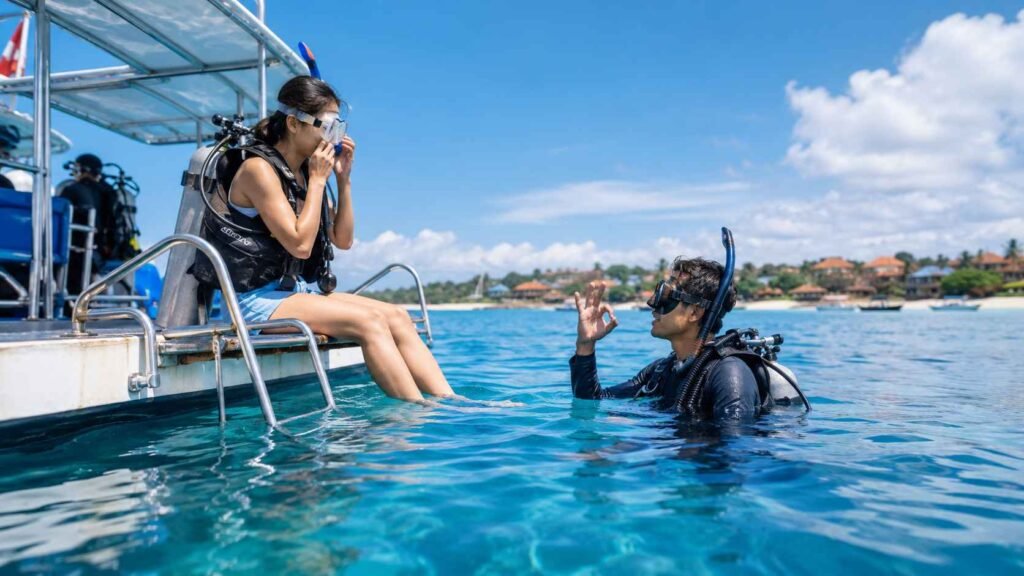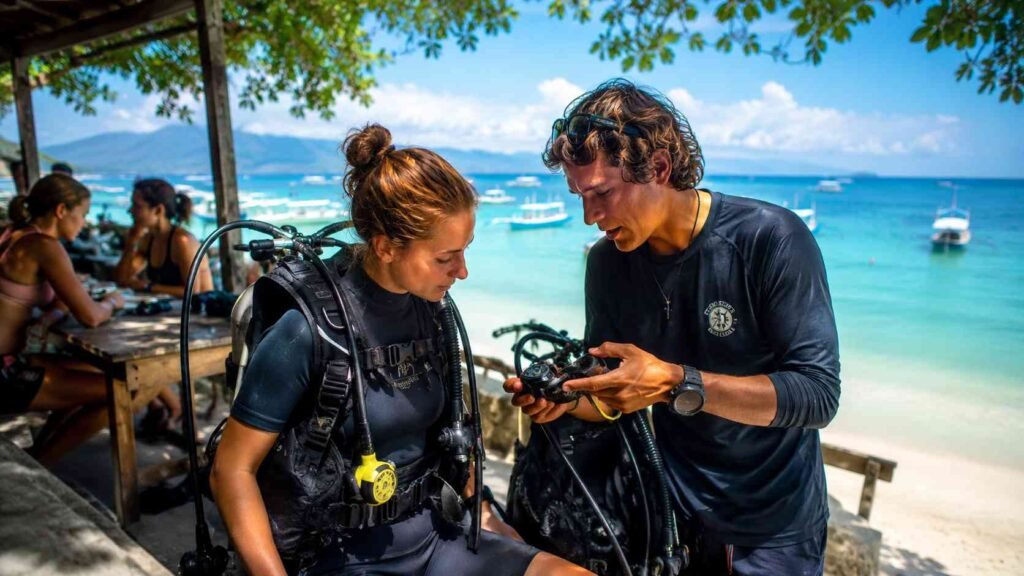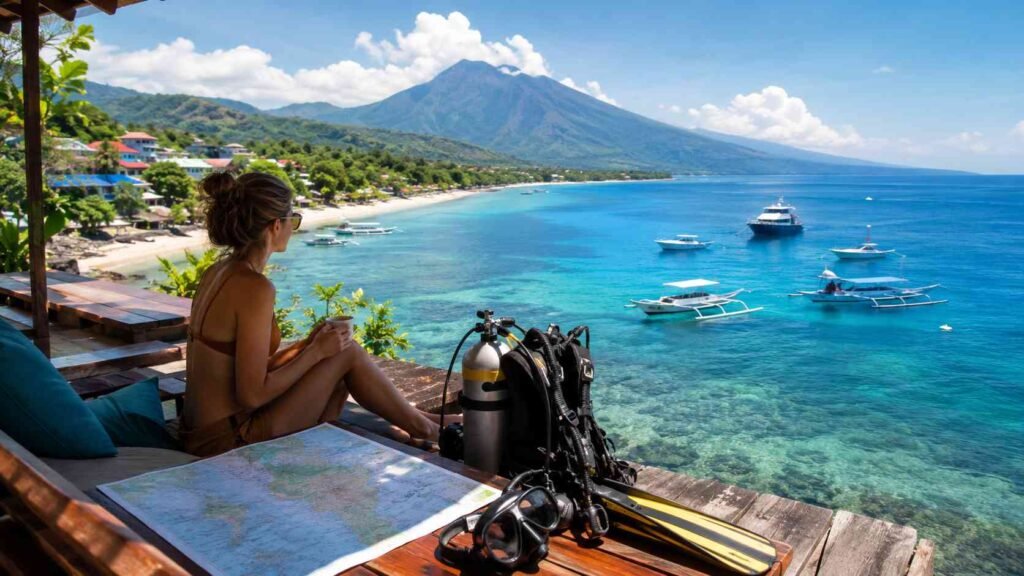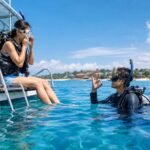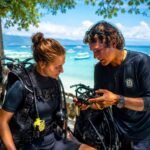
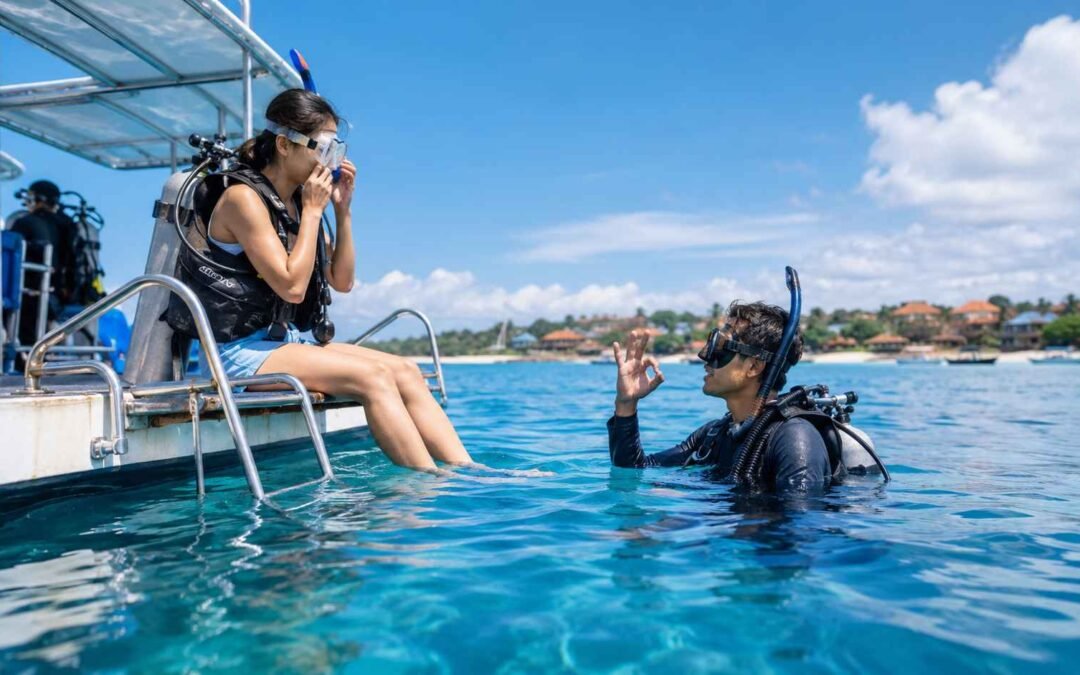
Bali Diving for Non-Swimmers is becoming one of the most popular adventure experiences for travelers who have never learned how to swim but still dream of exploring the underwater world. Many first-time visitors assume scuba diving requires strong swimming skills, yet modern introductory dive programs are specifically designed to help beginners enjoy the ocean safely under the direct supervision of certified dive professionals. With calm dive sites, high-quality equipment, and experienced instructors, Bali offers one of the best destinations in the world for non-swimmers who want to experience colorful coral reefs, tropical fish, and unforgettable marine life without needing advanced swimming abilities.
Whether you are traveling with family, your partner, or friends, Bali provides numerous beginner-friendly dive locations where safety and comfort come first. This guide explains everything you need to know before booking your first underwater adventure.
Can Non-Swimmers Really Go Scuba Diving in Bali?
The simple answer is yes.
Many dive centers in Bali welcome non-swimmers for introductory scuba diving experiences. These programs are often called Discover Scuba Diving or Try Dive programs. They are specifically designed for people with no diving certification and little or no swimming experience.
Unlike snorkeling, scuba diving allows you to breathe normally through a regulator while underwater. Since you are wearing buoyancy equipment that helps control your position in the water, you do not need to swim long distances on the surface.
Instead, your instructor remains beside you throughout the dive, guiding every movement and ensuring you stay comfortable.
Why Bali is Perfect for Non-Swimmers
Bali has become one of Asia's leading diving destinations because it offers ideal conditions for beginners.
Some advantages include:
- Warm tropical water throughout the year
- Excellent underwater visibility
- Calm bays suitable for training
- Professional PADI-certified instructors
- Modern diving equipment
- Plenty of shallow dive sites
- Diverse marine life close to shore
Many dive sites begin in shallow water, allowing beginners to gradually build confidence before descending slightly deeper.
Is Swimming Required?
For introductory diving programs, many dive operators do not require strong swimming skills.
However, you should:
- Feel comfortable being in water
- Be physically healthy
- Listen carefully to instructor guidance
- Stay calm during the experience
If you cannot swim at all, always inform your instructor before the dive. This allows them to provide additional supervision and select the safest dive site.
Honesty is extremely important because your instructor's priority is your safety.
What Happens During Your First Dive?
Safety Briefing
Every beginner starts with a detailed explanation covering:
- How scuba equipment works
- Underwater breathing techniques
- Equalizing ear pressure
- Hand communication signals
- Safety procedures
- What to expect underwater
No diving experience is necessary.
Equipment Practice
Before entering deeper water, you'll practice:
- Breathing through the regulator
- Clearing water from the mask
- Recovering the regulator
- Floating comfortably
- Using buoyancy equipment
Most beginners are surprised by how natural breathing underwater feels after only a few minutes.
Shallow Water Training
Your instructor will slowly introduce you to the underwater environment.
This allows you to become comfortable before moving to the actual dive site.
Guided Dive
Once you're ready, your instructor leads you throughout the dive.
The instructor typically stays within arm's reach, helping control your direction, depth, and buoyancy while pointing out interesting marine life.
Best Dive Sites in Bali for Non-Swimmers
Sanur
Sanur offers relatively calm conditions during much of the year. The gentle currents and easy boat access make it popular for introductory dives.
Beginners often enjoy:
- Coral gardens
- Small reef fish
- Calm underwater landscapes
Padang Bai
Padang Bai features protected bays with clear water and shallow reefs.
This location is excellent for:
- First-time divers
- Families
- Nervous beginners
- Non-swimmers
Amed
Amed is famous for its relaxed atmosphere and gradual shoreline.
The calm environment makes entering the water much less intimidating for beginners.
You may encounter:
- Colorful reef fish
- Sea turtles
- Healthy coral reefs
- Blue-spotted stingrays
Tulamben
Tulamben is one of Bali's most famous diving destinations.
Many beginner programs take place around the shallow sections of the Liberty Shipwreck, allowing new divers to experience an incredible underwater environment without deep diving.
Marine Life You May See
One of the highlights of Bali diving is its rich biodiversity.
Depending on the location and season, you might encounter:
- Sea turtles
- Clownfish
- Butterflyfish
- Angelfish
- Moorish idols
- Lionfish
- Blue sea stars
- Soft corals
- Giant clams
- Garden eels
- Reef octopus
- Nudibranchs
- Schools of tropical fish
Even shallow dives offer remarkable marine life.
How Safe is Diving for Non-Swimmers?
When conducted by professional instructors, introductory scuba diving is considered very safe.
Dive centers follow international standards that include:
- Professional instructor supervision
- Equipment inspection
- Medical questionnaires
- Controlled dive depths
- Emergency procedures
- Small student-to-instructor ratios
Most introductory dives remain within conservative depths specifically designed for beginners.
Tips to Feel More Comfortable
Relax Before Entering the Water
Anxiety is completely normal for first-time divers.
Take slow breaths and trust your instructor.
Never Hold Your Breath
One of the most important scuba rules is to breathe continuously throughout the dive.
Slow, relaxed breathing helps conserve air and keeps you calm.
Equalize Frequently
As you descend, gently equalize your ears to avoid discomfort.
Your instructor will demonstrate the correct technique.
Focus on Breathing
Many beginners become nervous simply because breathing underwater feels unfamiliar.
After a few minutes, it usually becomes surprisingly natural.
Communicate Often
Use hand signals whenever you have questions or feel uncomfortable.
Your instructor can easily adjust the dive pace.
What Equipment Will You Wear?
Your dive center provides all necessary equipment, including:
- Scuba tank
- Buoyancy Control Device (BCD)
- Regulator
- Dive mask
- Fins
- Wetsuit
- Weight system
All equipment should be professionally maintained and fitted specifically for you.
Common Fears First-Time Divers Have
Fear of Breathing Underwater
This is the most common concern.
After practicing in shallow water, most people quickly become comfortable.
Fear of Deep Water
Introductory dives stay relatively shallow.
You descend gradually only when you feel ready.
Fear of Marine Animals
Most reef creatures are harmless and avoid human contact.
Your instructor ensures you maintain a respectful distance from marine life.
Fear of Panic
Professional instructors are trained to recognize nervousness early and help divers relax before continuing.
Read more: Bali Diving vs Komodo Diving
What Should You Bring?
Prepare for your dive by bringing:
- Swimwear
- Towel
- Sunscreen
- Sunglasses
- Dry clothes
- Waterproof bag
- Drinking water
Avoid consuming alcohol before diving.
Stay hydrated and get plenty of rest the night before.
Read more: Bali Diving vs Philippines Diving
Who Should Avoid Diving?
Although introductory diving is suitable for many people, some medical conditions require physician approval.
You should consult a doctor if you have:
- Serious heart conditions
- Severe asthma
- Recent surgery
- Lung disorders
- Epilepsy
- Pregnancy
Always answer the medical questionnaire honestly.
Read more: Bali Diving vs Thailand Diving
Benefits of Trying Scuba Diving
Many travelers describe their first dive as one of the most memorable experiences of their Bali vacation.
Benefits include:
- Discovering an entirely new world
- Overcoming personal fears
- Building confidence
- Learning a new lifelong hobby
- Seeing marine life up close
- Creating unforgettable memories
Many non-swimmers become certified divers after their first experience.
Read more: Best Areas to Stay for Diving in Bali
Frequently Asked Questions
Can I scuba dive if I cannot swim?
Yes. Many Bali dive centers offer introductory programs specifically designed for non-swimmers under direct instructor supervision.
How deep will I go?
Most beginner dives remain at conservative depths suitable for first-time divers.
Will my instructor stay with me?
Yes. During introductory dives, your instructor remains close throughout the experience.
Is scuba diving easier than snorkeling?
Many people find scuba diving easier because they breathe normally underwater instead of floating on the surface while using a snorkel.
What is the minimum age?
Most introductory diving programs accept children from around 10 years old, depending on the dive center's policies and the child's comfort level.
Read more: Can You Learn to Dive in Bali in 3 Days?
Final Thoughts
Bali Diving for Non-Swimmers proves that you do not need to be an expert swimmer to experience the beauty of the underwater world. With professional instructors, internationally recognized safety standards, beginner-friendly dive sites, and calm tropical waters, Bali offers an incredible opportunity for anyone to take their first breath beneath the surface. By choosing a reputable dive center, communicating openly about your experience level, and following your instructor's guidance, even complete beginners can safely discover vibrant coral reefs, fascinating marine life, and the unforgettable feeling of weightlessness underwater. For many visitors, their first dive in Bali becomes the beginning of a lifelong passion for exploring the ocean.