How to Reduce Fatigue After Diving is an important topic for every scuba diver, whether you are completing your first open water dive or have hundreds of dives in your logbook. Feeling tired after diving is common, but excessive fatigue should never be ignored. Understanding why your body feels exhausted underwater and knowing how to recover properly can help you stay healthier, enjoy more dives, and improve your overall diving experience. By following the right hydration, nutrition, rest, and dive planning strategies, you can reduce post-dive fatigue and feel ready for your next underwater adventure.
Why Do Divers Feel Tired After Diving?
Many divers are surprised by how exhausting diving can be. Even though scuba diving may appear relaxing, your body works harder than it does during many other recreational activities.
Several factors contribute to fatigue after diving:
- Increased breathing resistance from scuba equipment
- Cold water temperatures
- Carrying heavy dive gear
- Swimming against currents
- Nitrogen absorption during the dive
- Physical and mental concentration
- Mild dehydration
- Multiple dives in one day
Each of these factors places additional stress on your body, making fatigue a natural response.
Stay Hydrated Before and After Diving
One of the biggest reasons divers feel exhausted is dehydration.
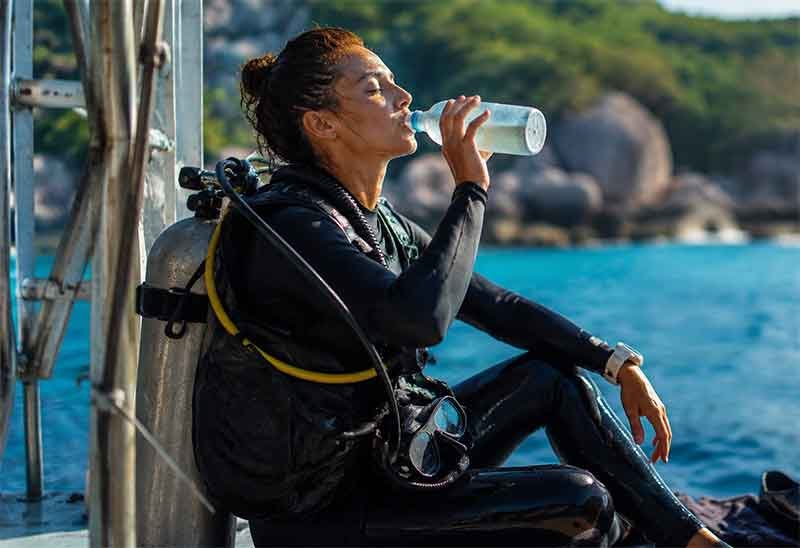
Breathing compressed air is extremely dry, causing your body to lose moisture through every breath. Saltwater exposure, sweating while wearing thick exposure suits, and spending hours in the sun can also increase fluid loss.
To stay properly hydrated:
- Drink water throughout the day before diving.
- Continue drinking water after every dive.
- Include electrolyte drinks after multiple dives.
- Limit alcohol before and immediately after diving.
- Avoid excessive caffeine if it causes dehydration.
Good hydration helps improve circulation, supports nitrogen elimination, and reduces headaches and tiredness.
Eat the Right Foods
Your body needs fuel before and after diving.
Before Diving
Eat a balanced meal that includes:
- Complex carbohydrates
- Lean protein
- Healthy fats
- Fruits
- Vegetables
Avoid diving on an empty stomach, but also avoid eating a very heavy meal immediately before entering the water.
After Diving
Recovery meals should include:
- Protein for muscle repair
- Healthy carbohydrates for energy replacement
- Fresh fruit for vitamins and hydration
- Plenty of water
Healthy nutrition helps your body recover much faster.
Get Enough Sleep
Lack of sleep is one of the most overlooked causes of diving fatigue.
Divers who sleep poorly often experience:
- Slower reaction times
- Reduced concentration
- Faster air consumption
- Increased stress
- Greater post-dive exhaustion
Aim for at least 7 to 9 hours of quality sleep before a diving day.
If you are planning several days of diving, maintaining a consistent sleep schedule becomes even more important.
Dive Within Your Fitness Level
Good physical fitness makes diving much easier.
Regular exercise improves:
- Cardiovascular endurance
- Breathing efficiency
- Muscle strength
- Recovery speed
- Overall energy levels
Activities such as swimming, cycling, walking, and strength training can improve diving performance without requiring intense athletic ability.
Avoid Overexertion Underwater
Many divers unknowingly waste energy underwater.
Common causes include:
- Swimming too fast
- Fighting strong currents
- Poor buoyancy control
- Carrying unnecessary equipment
- Constant finning
Learning efficient buoyancy control allows you to glide through the water with minimal effort.
Relaxed diving also reduces air consumption and conserves energy.
Keep Warm During the Dive
Cold water forces your body to work harder to maintain its core temperature.
This increases:
- Energy consumption
- Air usage
- Muscle fatigue
- Overall exhaustion
Choose exposure protection appropriate for the water temperature.
Depending on conditions, this may include:
- Rash guards
- Short wetsuits
- Full wetsuits
- Semi-dry suits
- Dry suits
Remaining comfortably warm throughout the dive significantly reduces fatigue.
Practice Efficient Breathing
Proper breathing conserves both energy and air.
Focus on:
- Slow breathing
- Deep breaths
- Relaxed exhalation
- Avoiding rapid or shallow breathing
Calm breathing lowers heart rate and reduces unnecessary physical effort.
Many experienced divers report feeling much less tired simply by improving their breathing technique.
Improve Your Buoyancy Skills
Excellent buoyancy is one of the most valuable diving skills.
Benefits include:
- Less finning
- Reduced muscle strain
- Lower air consumption
- Better underwater control
- Increased comfort
Taking time to master buoyancy can dramatically reduce fatigue during long dives.
Don't Rush Surface Intervals
Surface intervals are essential for recovery.
During this time:
- Drink water.
- Eat a light snack.
- Relax in the shade.
- Avoid unnecessary physical activity.
- Let your body recover before the next dive.
Divers who rush between dives often feel increasingly tired later in the day.
Limit the Number of Dives
More dives do not always mean more enjoyment.
Even experienced divers can become fatigued after multiple dives.
Consider reducing your dive schedule if you notice:
- Muscle soreness
- Headaches
- Poor concentration
- Heavy breathing
- Low energy
Listening to your body is part of safe diving.
Avoid Alcohol After Diving
Many travelers enjoy relaxing with drinks after diving, but alcohol can slow recovery.
Alcohol may:
- Increase dehydration
- Worsen fatigue
- Affect sleep quality
- Delay recovery
Waiting until your diving day has completely finished and rehydrating first is a much healthier approach.
Stretch After Diving
Simple stretching can reduce muscle tightness after carrying heavy equipment.
Focus on stretching:
- Neck
- Shoulders
- Lower back
- Hips
- Legs
- Calves
Gentle stretching improves flexibility and circulation without overworking your muscles.
Reduce Stress During Dive Planning
Mental fatigue contributes just as much as physical fatigue.
Planning ahead reduces stress.
Prepare your:
- Dive equipment
- Dive computer
- Camera batteries
- Exposure suit
- Transportation
- Meals
- Water supply
Being organized allows you to enjoy the dive instead of worrying about forgotten equipment.
Recognize When Fatigue May Be a Warning Sign
While mild tiredness is normal, extreme fatigue should never be ignored.
Seek medical evaluation if fatigue is accompanied by:
- Joint pain
- Difficulty breathing
- Chest pain
- Dizziness
- Weakness
- Numbness
- Confusion
- Vision problems
In some cases, unusual fatigue may be associated with decompression illness or another medical condition requiring immediate attention.
When in doubt, stop diving and seek professional medical advice.
Recovery Tips After a Full Day of Diving
A complete recovery routine can help you feel much better the following day.
A good recovery plan includes:
- Drinking plenty of water
- Eating nutritious meals
- Taking a warm shower
- Performing gentle stretching
- Sleeping early
- Avoiding excessive alcohol
- Getting adequate rest
These habits help your body recover from both physical exertion and nitrogen exposure.
Common Mistakes That Increase Diving Fatigue
Many divers unintentionally make recovery harder.
Common mistakes include:
- Skipping breakfast
- Not drinking enough water
- Poor buoyancy
- Swimming too aggressively
- Wearing inadequate thermal protection
- Staying in the sun too long
- Carrying tanks improperly
- Scheduling too many dives
- Sleeping too little
- Drinking alcohol too soon
Avoiding these habits can significantly improve your energy levels after diving.
Frequently Asked Questions
Is it normal to feel tired after scuba diving?
Yes. Mild fatigue is common because diving places physical demands on the body, including carrying equipment, breathing compressed air, and maintaining body temperature underwater.
How long does diving fatigue last?
Most divers recover within several hours after a dive. Following a full day of diving, mild tiredness may continue until the next day, especially if hydration, nutrition, or sleep were inadequate.
Does dehydration make diving fatigue worse?
Absolutely. Dehydration is one of the leading causes of post-dive fatigue and can also contribute to headaches and slower recovery.
Can exercise reduce diving fatigue?
Yes. Regular cardiovascular exercise, swimming, and strength training improve endurance, making diving less physically demanding.
Should I be worried about extreme fatigue after diving?
Yes. Severe or unusual fatigue, especially when accompanied by pain, numbness, dizziness, breathing difficulty, or confusion, should be evaluated immediately by a qualified diving medical professional.
Conclusion
Knowing how to reduce fatigue after diving allows you to enjoy safer, more comfortable underwater adventures while protecting your long-term health. Hydration, proper nutrition, quality sleep, efficient buoyancy, relaxed breathing, and realistic dive planning all play an important role in minimizing post-dive exhaustion. By listening to your body and practicing smart recovery habits, you can maximize your energy, improve your diving performance, and make every dive more enjoyable from start to finish.
Related Posts: