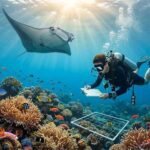
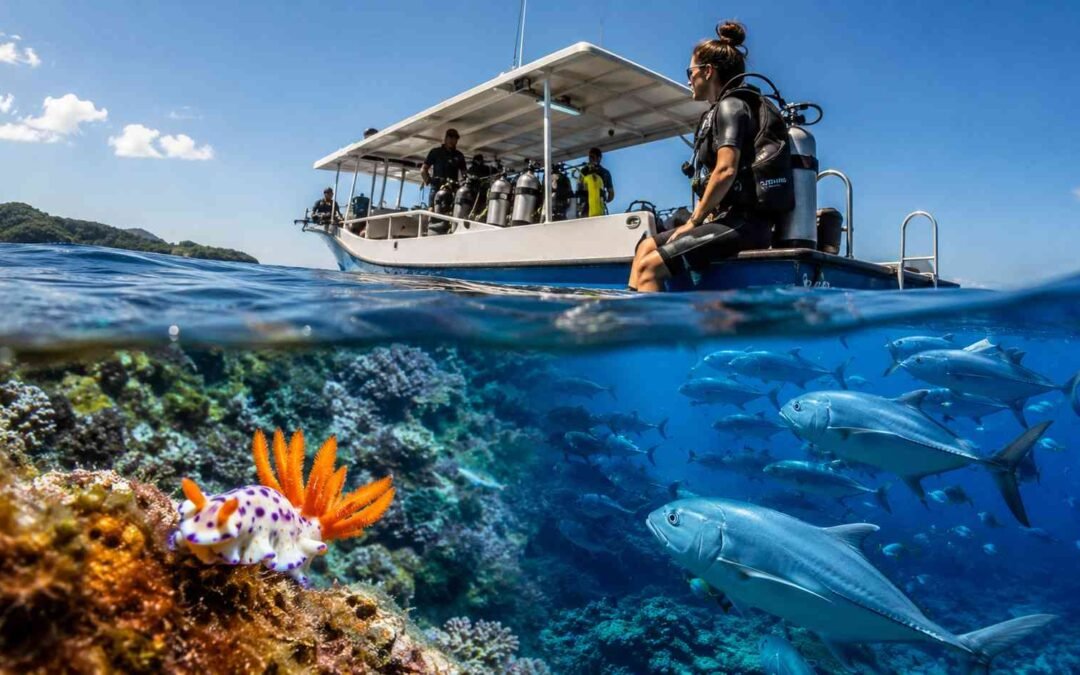
Macro vs Big Fish Diving in Bali is one of the biggest decisions scuba divers face when planning an underwater adventure on the Island of the Gods. Bali is internationally recognized as one of the few diving destinations where both world-class macro photography and thrilling encounters with large marine animals are possible. Depending on the season, dive location, and your personal interests, you can spend one day searching for tiny, colorful nudibranchs and the next swimming alongside majestic manta rays or the elusive mola mola. This guide explains the differences between macro and big fish diving in Bali, the best dive sites for each experience, and how to choose the perfect underwater adventure.
Understanding Macro Diving
Macro diving focuses on discovering the smallest creatures hiding within coral reefs, sandy bottoms, and underwater rubble. Rather than searching for large marine life, divers carefully examine every corner of the reef for fascinating tiny animals.
Many macro enthusiasts carry underwater cameras equipped with macro lenses because these incredible creatures are often only a few centimeters long. Their colors, textures, and unique behaviors create spectacular photographic opportunities.
Some of Bali's most sought-after macro subjects include:
- Nudibranchs
- Pygmy seahorses
- Ghost pipefish
- Frogfish
- Harlequin shrimp
- Skeleton shrimp
- Seahorses
- Leaf scorpionfish
- Juvenile reef fish
- Colorful flatworms
Macro diving requires patience, slow movements, and excellent buoyancy control. Often, the best discoveries are pointed out by experienced local dive guides who know exactly where these hidden creatures live.
Why Bali Is a World-Class Macro Destination
Bali offers an incredible diversity of underwater habitats, making it one of Southeast Asia's top macro diving destinations.
The island features:
- Black volcanic sand slopes
- Coral gardens
- Artificial reefs
- Sandy muck sites
- Seagrass beds
- Rocky reef walls
These different ecosystems provide shelter for countless rare marine species that are difficult to find elsewhere.
Many underwater photographers visit Bali specifically to capture rare critters that appear only during certain seasons.
Best Macro Diving Sites in Bali
Seraya Secrets
Seraya Secrets is famous for muck diving and offers excellent opportunities to photograph frogfish, ghost pipefish, shrimp, octopus, and many unusual bottom-dwelling species.
Secret Bay
Located in northwest Bali, Secret Bay is one of Indonesia's premier muck diving locations.
Divers frequently encounter:
- Seahorses
- Dragonets
- Stargazers
- Pipefish
- Mimic octopus
- Blue-ring octopus (observed from a safe distance)
- Rare nudibranch species
Tulamben
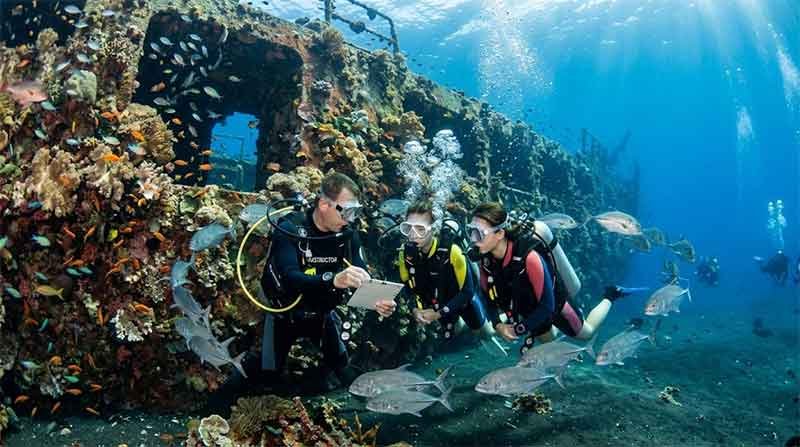
While Tulamben is famous for the USAT Liberty Shipwreck, its surrounding reefs also provide fantastic macro opportunities.
Photographers often discover:
- Pygmy seahorses
- Ribbon eels
- Leaf fish
- Decorator crabs
- Tiny shrimps
- Colorful nudibranchs
What Is Big Fish Diving?
Big fish diving focuses on encounters with larger marine animals that roam the open ocean or patrol coral reefs.
These dives usually involve stronger currents, deeper water, and dramatic underwater landscapes.
Instead of slowly examining the reef, divers watch the blue water for large pelagic species.
Common big marine life in Bali includes:
- Manta rays
- Mola mola (Ocean Sunfish)
- Reef sharks
- Eagle rays
- Giant trevally
- Barracuda
- Tuna
- Napoleon wrasse
- Large turtles
These encounters often become unforgettable highlights for divers visiting Bali.
Why Bali Is Famous for Big Fish Diving
Bali lies within the Coral Triangle, the world's richest marine biodiversity region.
Powerful ocean currents flowing through the Indonesian archipelago bring nutrient-rich water that attracts larger marine animals throughout the year.
Seasonal changes create ideal conditions for migratory species, especially around Nusa Penida.
Many professional divers consider Bali one of the few destinations where divers can see both macro critters and giant pelagic animals during the same vacation.
Best Big Fish Diving Sites in Bali
Manta Point
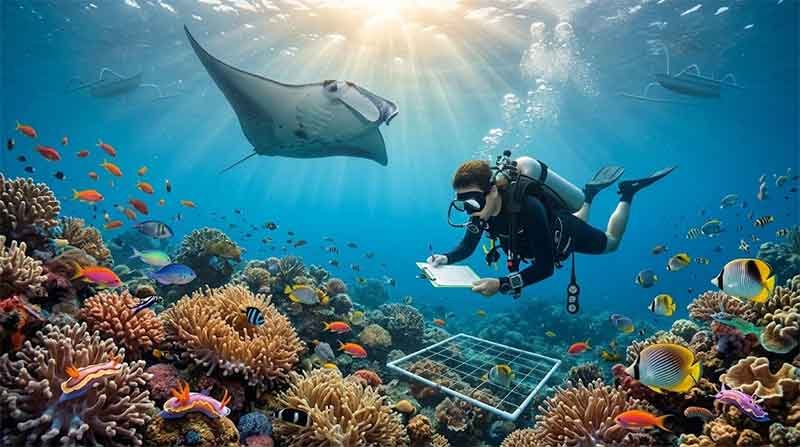
Manta Point is the most reliable location in Bali for encountering reef manta rays.
Divers frequently observe mantas:
- Feeding
- Gliding gracefully overhead
- Visiting cleaning stations
- Swimming in groups
Sightings are possible throughout the year.
Crystal Bay
Crystal Bay is internationally famous for mola mola sightings during the dry season.
Between July and October, divers from around the world travel here hoping to encounter these enormous ocean sunfish as they visit cleaning stations.
Blue Corner
Blue Corner offers exciting drift diving with strong currents that attract:
- Reef sharks
- Giant trevally
- Barracuda
- Tuna
- Eagle rays
This site is recommended for experienced divers due to challenging conditions.
Gili Biaha
Known for dramatic underwater cliffs and caves, Gili Biaha provides opportunities to encounter reef sharks, turtles, schools of fish, and occasionally larger pelagic visitors.
Macro Diving vs Big Fish Diving
Marine Life
Macro diving focuses on tiny reef inhabitants hiding among coral and sand.
Big fish diving targets larger marine species swimming in open water.
Dive Style
Macro dives are generally slow and relaxed, allowing divers to search carefully for hidden animals.
Big fish dives often involve drift diving, stronger currents, and covering larger areas.
Photography
Macro photography emphasizes close-up images of tiny creatures.
Wide-angle photography is preferred for manta rays, sharks, mola mola, and schools of fish.
Skill Level
Many macro sites are suitable for beginner divers because conditions are usually calm.
Big fish sites may require advanced certifications and experience due to currents and deeper depths.
Which Experience Is Better?
There is no universal answer because every diver enjoys different aspects of the underwater world.
Choose macro diving if you enjoy:
- Underwater photography
- Rare marine species
- Relaxed dives
- Small colorful animals
- Detailed exploration
Choose big fish diving if you enjoy:
- Adrenaline
- Large marine animals
- Drift diving
- Wide underwater scenery
- Memorable wildlife encounters
Many experienced divers combine both experiences during a single Bali diving holiday.
Read more: Bali Diving for Honeymooners
Can You Do Both During One Trip?
Absolutely.
One of Bali's greatest advantages is the short travel distance between different dive regions.
A typical dive itinerary could include:
- Tulamben for macro diving
- Amed for reef exploration
- Nusa Penida for manta rays and mola mola
- Padang Bai for turtles and reef sharks
- Secret Bay for muck diving
This variety makes Bali one of the most complete diving destinations in Asia.
Read more: Bali Diving for Solo Travelers
Best Season for Macro Diving
Macro diving is available throughout the year because tiny marine creatures inhabit Bali's reefs continuously.
However, photographers often find excellent visibility between April and November.
After seasonal changes, new critters frequently appear, making every dive unique.
Read more: Small Group vs Private Diving in Bali
Best Season for Big Fish Diving
Large marine animal sightings vary throughout the year.
Generally:
- Manta rays can be seen year-round.
- Mola mola are most commonly seen from July to October.
- Reef sharks can be encountered throughout the year at selected dive sites.
- Schooling pelagic fish are often more active during periods of stronger currents.
Local dive operators monitor conditions daily to maximize wildlife encounters.
Read more: Safety Standards for Dive Centers in Bali
Tips for Choosing Your Dive Adventure
Before booking your dives, consider:
- Your certification level
- Comfort with currents
- Photography interests
- Marine life preferences
- Seasonal wildlife
- Number of diving days
Speaking with an experienced dive center can help you create the perfect itinerary based on current conditions.
Read more: Coral Reefs of Bali Explained
Conclusion
Macro vs Big Fish Diving in Bali is not about deciding which experience is better—it is about discovering two completely different sides of Bali's extraordinary underwater world. Macro diving reveals a hidden universe of tiny, colorful creatures that amaze photographers and marine life enthusiasts, while big fish diving delivers unforgettable encounters with manta rays, reef sharks, schooling fish, and the legendary mola mola. Because Bali offers exceptional opportunities for both styles of diving within a relatively small area, divers can enjoy the best of both worlds during a single trip. Whether your dream dive involves photographing a tiny pygmy seahorse or swimming beside a graceful manta ray, Bali remains one of the world's most rewarding scuba diving destinations.