Best season To Dive In Amed. Amed, a peaceful coastal stretch on the eastern side of Bali, has quietly become one of the island’s most loved diving destinations. Known for its calm atmosphere, black sand seabeds, and vibrant coral gardens, Amed offers a completely different vibe compared to the busier south. One of the biggest advantages of diving here is that conditions are generally good year-round — but certain seasons stand out depending on what you want to experience underwater.
If you’re planning a dive trip or simply curious about the best time to explore Amed’s reefs, understanding the seasonal patterns will help you get the most out of your dives.
Overview: Can You Dive in Amed All Year?
Yes — Amed is a year-round diving destination. The area is protected from strong ocean swells, and most dive sites are accessible in nearly any month. However, visibility, water temperature, and marine life encounters vary slightly throughout the year, which is why divers often consider certain periods the “best season.”
In general, Amed has two main seasons:
- Dry season: April to November
- Rainy season: December to March
Both have their advantages, so the best season really depends on your priorities.
Dry Season (April – November): The Best Overall Conditions
For most divers, the dry season is considered the prime time to dive in Amed. During these months, you’ll typically find the most stable weather and the clearest underwater visibility.
Why the Dry Season Is Ideal
1. Excellent Visibility
Visibility often ranges from 15 to 30 meters, making it perfect for underwater photography and enjoying the vibrant coral landscapes.
2. Calm Seas
Surface conditions are usually calm, which means easier entries and exits — great for beginners and relaxed dive trips.
3. Comfortable Diving Weather
Sunny days and low humidity create pleasant surface intervals and smoother boat rides.
Marine Life Highlights
During the dry season, you can expect to see:
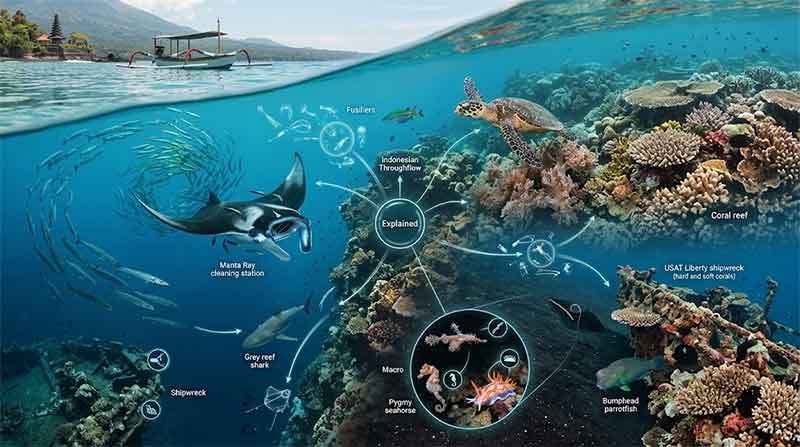
- Reef fish in large numbers
- Turtles cruising along the slopes
- Macro life like nudibranchs and shrimp
- Occasional reef sharks
This period is ideal if you want classic tropical diving with reliable conditions.
Rainy Season (December – March): Fewer Crowds, Unique Encounters
While the rainy season brings occasional showers, diving is still very much possible — and often enjoyable — in Amed. Rain usually falls in short bursts rather than all-day storms, and many days remain sunny.
Why You Might Love Diving in the Rainy Season
1. Quieter Dive Sites
With fewer tourists in Bali overall, you’ll often have dive sites almost to yourself.
2. Lush Scenery Above Water
The surrounding hills turn bright green, making the coastal scenery especially beautiful.
3. Good Macro Opportunities
Slightly richer nutrients in the water can attract fascinating small critters, making this a fun time for macro photographers.
Read more: How Many Dives Do You Need In Tulamben
Things to Consider
- Visibility may drop to around 10–20 meters on some days
- Seas can occasionally be a bit choppier
- Rain showers can happen, but they rarely stop diving entirely
If you don’t mind a bit of unpredictability, this season can still deliver fantastic dives.
Read more: Why Padang Bai Is A Favorite For Dive Training
Water Temperature Throughout the Year
Amed’s water temperature is generally comfortable, but it does fluctuate slightly.
- Average range: 26°C to 29°C
- Cooler months: July to September may dip closer to 26°C
- Warmer months: November to April often feel warmer
Most divers are comfortable in a 3mm wetsuit year-round, though some prefer a 5mm during cooler periods.
Read more: How To Prepare For Strong Currents In Nusa Penida
Best Time for Specific Diving Goals
Choosing the best season depends on what kind of experience you’re looking for.
For best visibility and calm conditions:
👉 April to November
For fewer crowds and relaxed diving:
👉 January to March
For underwater photography:
👉 May to October
For macro lovers:
👉 December to February
Read more: Night Diving In Amed
How Amed Compares to Nearby Dive Areas
Many divers pair Amed with trips to nearby sites like Tulamben, famous for its shipwreck dives. The good news is that seasonal conditions are very similar, so you can easily explore both areas in the same trip without worrying about drastic changes in weather or visibility.
Read more: Nusa Penida Diving For Adventure Seekers
Final Thoughts
The truth is, there’s no single “bad” time to dive in Amed. Its sheltered coastline and consistent conditions make it one of Bali’s most reliable dive destinations.
If you want postcard-perfect visibility and sunny skies, the dry season is your best bet. But if you prefer a quieter atmosphere and don’t mind occasional rain, the wet season can be equally rewarding.
Ultimately, the best season to dive in Amed is the one that matches your travel style — whether that’s chasing perfect conditions, avoiding crowds, or simply enjoying the relaxed rhythm of Bali’s east coast.