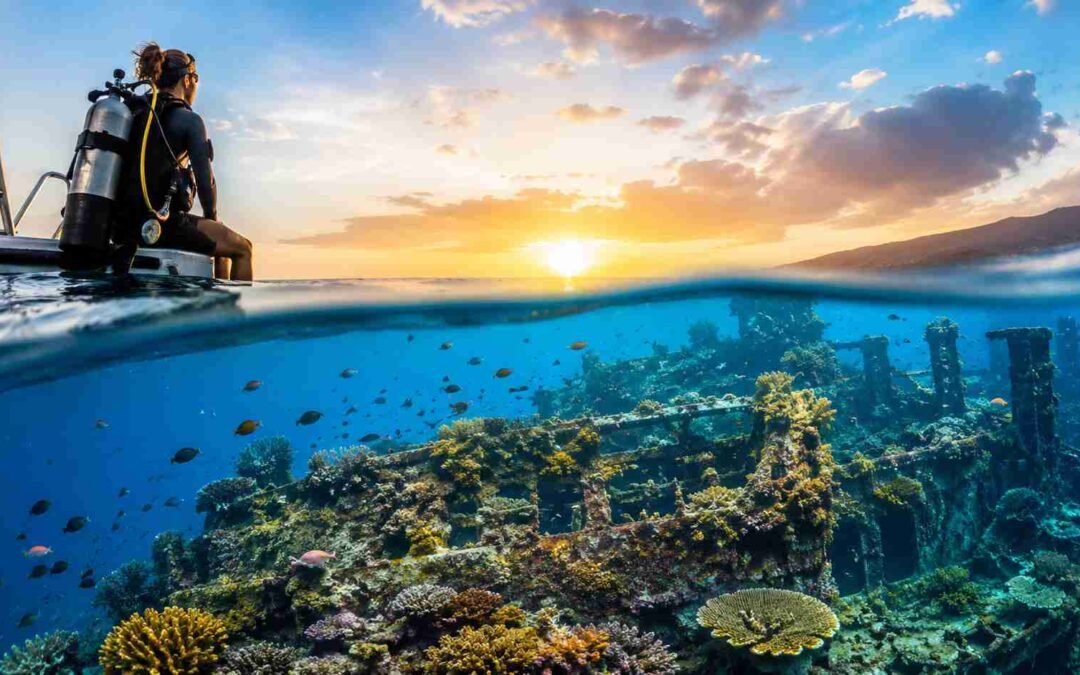
Coral growth On The Liberty Wreck. The History Of Liberty Wreck, is one of Bali’s most iconic dive sites. Originally an American cargo ship, the Liberty was torpedoed during World War II and stranded on the shores of Tulamben. Over decades, nature has transformed this once formidable vessel into a thriving underwater habitat. Divers today find themselves exploring not just a historical relic, but a living reef teeming with life.
How the Wreck Became a Coral Haven
The process of coral colonization on shipwrecks is fascinating. When the Liberty settled on the seabed, its metal structure offered a stable substrate for coral larvae. Hard corals such as Acropora and Porites first began to attach to the ship, gradually creating complex structures. Soft corals soon followed, adding color and providing shelter for fish and invertebrates. This slow but steady colonization demonstrates how artificial structures can evolve into sustainable marine ecosystems over time.
Types of Corals Found on the Liberty
- Hard Corals: These form the backbone of the reef. On the Liberty, divers can see branching Acropora, massive Porites, and delicate table corals, which all provide shelter for countless marine species.
- Soft Corals: Including leather corals and sea fans, these corals sway with the currents, adding movement and vibrancy to the wreck.
- Encrusting Corals: These spread across the ship’s hull, gradually covering metal surfaces with a living layer that supports algae and small reef organisms.
Read more: Top 10 Marine Species You'll See In Tulamben
Marine Life Supported by the Coral
The coral growth on the Liberty Wreck has created an ecosystem that attracts a wide variety of marine life. Schools of barracuda, snapper, and fusiliers weave through coral branches, while smaller species like blennies, damselfish, and gobies find refuge in crevices. Larger predators, such as groupers and reef sharks, patrol the area, making the wreck a hotspot for underwater biodiversity. Invertebrates such as nudibranchs, shrimps, and crabs thrive alongside the corals, demonstrating a fully functioning reef ecosystem.
Read more: Padang Bai Night Diving: What Can You See?
Factors Contributing to Healthy Coral Growth
Several environmental factors have helped the Liberty Wreck become a flourishing reef:
- Water Clarity: The waters around Tulamben are generally clear, allowing sunlight to penetrate and support photosynthetic corals.
- Stable Substrate: The wreck provides a solid structure where corals can attach, unlike loose sand or shifting rocks.
- Nutrient Availability: Ocean currents bring plankton and other nutrients, nourishing the coral and the associated marine life.
- Protected Area: Local conservation efforts and dive tourism regulations help prevent overfishing and anchor damage, preserving the reef environment.
Read more: Why Amed Is Ideal For Solo Divers
Challenges to Coral Growth
Despite its success, the Liberty Wreck reef faces threats. Rising sea temperatures, ocean acidification, and occasional storm damage can stress corals. Divers and conservationists must maintain careful practices to minimize human impact, ensuring the wreck continues to thrive as a living reef.
Read more: Is Padang Bai Good For Underwater Photography?
Why Divers Love the Liberty Wreck
The Liberty Wreck is more than just a historical ship; it is a vibrant coral ecosystem that offers something for every diver. Beginners can enjoy shallow sections teeming with colorful corals and fish, while advanced divers can explore deeper areas with dramatic coral formations. Night dives reveal a different side of the wreck, with nocturnal species emerging from the coral colonies.
Read more: Can You Snorkel With Manta Rays In Nusa Penida?
Conclusion: A Ship Turned Sanctuary
The Liberty Wreck is a striking example of how human history and natural processes intersect. What began as a sunken cargo ship has transformed into a living reef, showcasing nature’s resilience and the power of marine colonization. For divers and marine enthusiasts, the Liberty offers a unique experience: exploring a relic of the past while witnessing the continuous growth and adaptation of a thriving underwater ecosystem.
The combination of historical intrigue, diverse marine life, and healthy coral growth makes the Liberty Wreck a must-visit site for anyone interested in underwater exploration. It is a reminder that even human-made structures can become havens for life when left to nature’s careful hands.