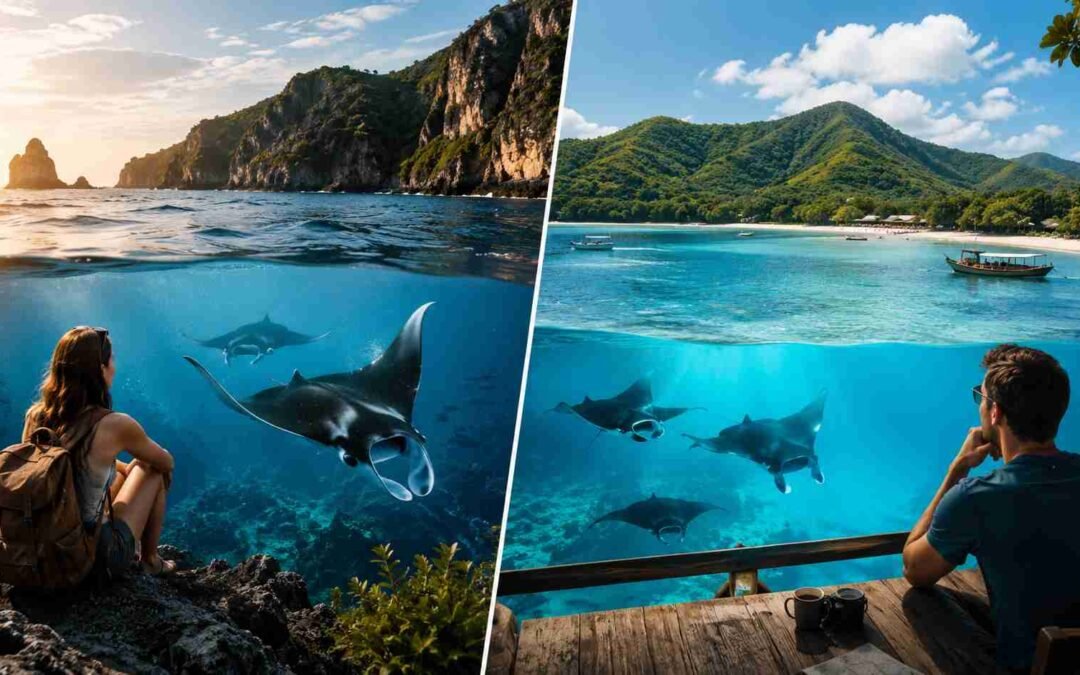
The Difference Between Manta Point and Manta Bay is a common topic among divers and ocean lovers planning a trip to Nusa Penida. While both sites are famous for encounters with majestic manta rays, they offer very different diving and snorkeling experiences. Understanding what sets them apart helps you choose the right spot based on your comfort level, sea conditions, and expectations underwater.
Overview of Both Dive Sites
Manta Point and Manta Bay are located around the coast of Nusa Penida, an island southeast of Bali known for its rich marine biodiversity. Both locations are cleaning and feeding stations for reef manta rays, which is why sightings are frequent throughout the year. However, their underwater topography, conditions, and accessibility create distinct experiences.
Location and Accessibility
Manta Point sits on the southern coast of Nusa Penida, facing the open Indian Ocean. Because of this exposure, it is farther from the main harbors and usually requires a longer boat ride. The journey can be bumpy, especially when the swell is strong, but the reward is a dramatic and wild underwater landscape.
Manta Bay, on the other hand, lies on the northwest side of the island. It is closer to the main departure points and more sheltered from large ocean swells. The shorter travel time and calmer surface conditions make it a more convenient option, especially for beginners or travelers prone to seasickness.
Underwater Topography
Manta Point: Rocky and Dramatic
Manta Point features a rocky reef with large boulders, cleaning stations, and sandy patches. The depth usually ranges from about 8 to 20 meters, with cleaning stations often located around 10 to 15 meters. The terrain creates a natural gathering place for manta rays, which circle slowly while cleaner fish remove parasites.
The rugged underwater scenery adds to the sense of adventure and makes the dive feel more like a true ocean exploration.
Manta Bay: Sandy and Shallow
Manta Bay is characterized by a sandy bottom with gentle slopes and fewer rock formations. The depth is generally shallower, often between 5 and 12 meters. Manta rays glide over the sandy seabed while feeding on plankton, creating excellent viewing conditions from above.
Because of the shallowness, it’s also popular for snorkeling, allowing non-divers to experience close encounters.
Conditions and Difficulty Level
Manta Point: More Challenging
Due to its exposure to the open ocean, Manta Point can have stronger swells, surge, and currents. Entry and exit can sometimes be more demanding, and visibility may vary depending on conditions. This site is typically recommended for certified divers who are comfortable in moderate ocean conditions.
However, when conditions are right, the experience is spectacular, often with multiple manta rays circling gracefully.
Manta Bay: Beginner-Friendly
Manta Bay is known for calmer waters and gentler currents. The protected location reduces swell, making it ideal for first-time divers and snorkelers. Visibility can fluctuate due to plankton, but this is also what attracts manta rays to feed, so sightings are still very common.
For those looking for a relaxed encounter, this site offers a more comfortable environment.
Type of Manta Ray Behavior
One of the most noticeable differences is how manta rays behave at each site.
At Manta Point, mantas are usually observed at cleaning stations. They hover and circle slowly while small fish clean their bodies. This behavior allows divers to stay relatively still and watch extended interactions, often for several minutes at a time.
At Manta Bay, mantas are typically feeding. They glide through the water with open mouths, sometimes performing graceful barrel rolls to scoop up plankton. This creates dynamic and exciting encounters, especially for snorkelers watching from the surface.
Read more: Why Amed Is Ideal For Solo Divers
Best Choice for Different Travelers
Choose Manta Point if You Want:
- A more adventurous dive
- Dramatic underwater scenery
- Longer, calmer manta interactions
- A site suited for experienced divers
Choose Manta Bay if You Want:
- Easier access and shorter boat ride
- Calmer sea conditions
- A great snorkeling experience
- A beginner-friendly dive
Read more: Is Padang Bai Good For Underwater Photography?
Visibility and Photography
Photographers often enjoy both sites for different reasons. Manta Point’s deeper cleaning stations allow for more composed shots with stable manta movement. Meanwhile, Manta Bay’s shallow water and sandy bottom can create beautiful natural light, especially on sunny days, though plankton may reduce clarity.
Wide-angle lenses work best in both locations due to the large size of the animals and the need to capture their full wingspan.
Read more: Can You Snorkel With Manta Rays In Nusa Penida?
Seasonal Considerations
Manta rays can be seen year-round at both sites, but ocean conditions vary with the seasons. During calmer months, Manta Point becomes more accessible and comfortable, while Manta Bay remains relatively consistent throughout the year. Operators typically choose the site based on daily weather and swell forecasts to ensure safety and the best chance of sightings.
Read more: Coral Growth On The Liberty Wreck: A Living Reef
Overall Experience
In essence, both sites deliver unforgettable manta encounters, but the atmosphere differs significantly. Manta Point feels raw, wild, and immersive, offering a classic big-ocean dive. Manta Bay feels relaxed and accessible, perfect for those who want a gentle introduction to swimming with these incredible creatures.
Read more: Snorkeling Vs Diving In Amed: Which Experience Suits You Best
Conclusion
The Difference Between Manta Point and Manta Bay ultimately comes down to conditions, depth, and the style of manta encounters you’re looking for. If you prefer a dramatic dive with cleaning station behavior, Manta Point is the ideal choice. If you want calm waters and an easy, close-up experience — especially for snorkeling — Manta Bay is hard to beat.
Both locations showcase the beauty of Nusa Penida’s marine life and provide memorable moments with manta rays, making either choice a highlight of any Bali diving or snorkeling trip.