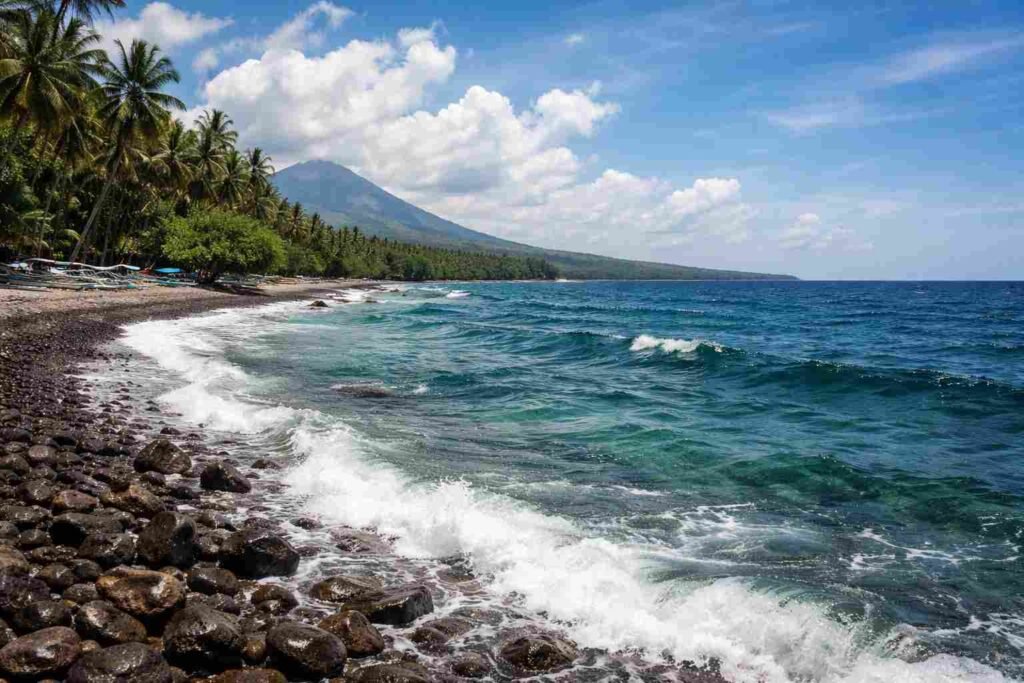
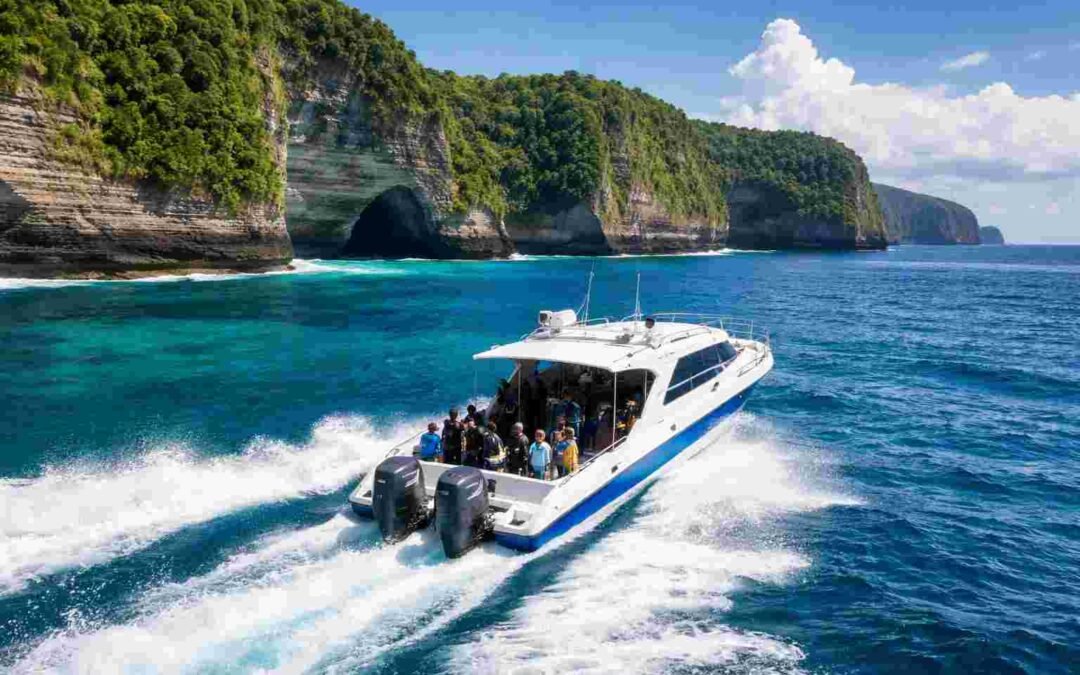
What Currents Are Like In Nusa Penida Dive Sites. Diving around Nusa Penida is famous for dramatic underwater scenery, large marine life, and crystal-clear water but it’s also well known for its strong and sometimes unpredictable currents. Understanding how these currents behave is essential for safe and enjoyable diving in this region.
Why Nusa Penida Has Strong Currents
Nusa Penida sits between the Indian Ocean and the Lombok Strait, a natural channel that funnels massive volumes of water between the Pacific and Indian Oceans. This geography creates powerful tidal exchanges, resulting in currents that can change speed and direction quickly. Seasonal upwellings also push cold, nutrient-rich water to the surface, which attracts big marine life but adds to current complexity.
Read more: Padang Bai Vs Tulamben Which Is Better
Types of Currents You’ll Experience
Horizontal currents
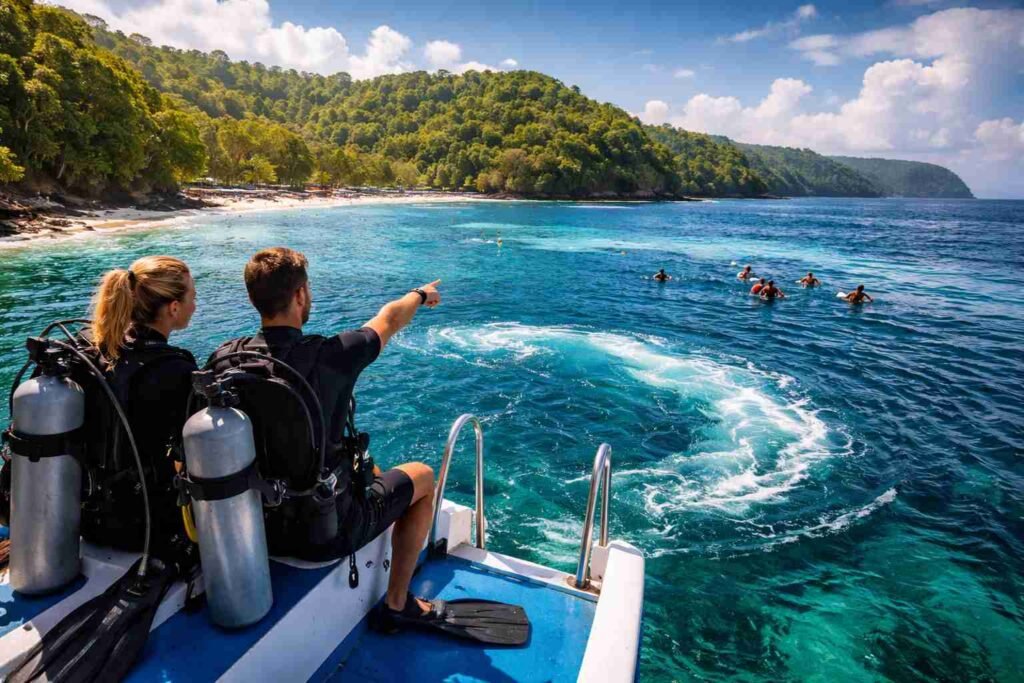
These are the most common and are often used for drift diving. In moderate conditions, they allow divers to glide effortlessly along reefs and walls. When strong, they can move divers quickly, requiring precise buoyancy and awareness.
Vertical currents (downcurrents and upcurrents)
Some dive sites experience vertical water movement, especially near steep walls and corners. Downcurrents can pull divers deeper, while upcurrents may lift them toward the surface. Proper positioning and calm responses are critical in these situations.
Eddies and changing currents
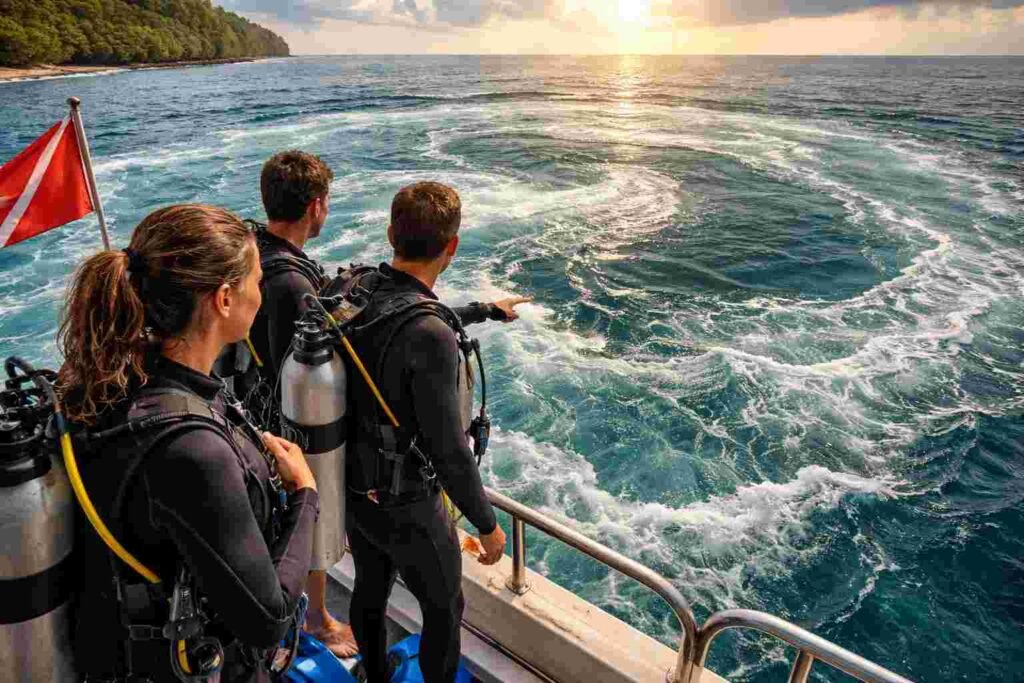
Currents can split and swirl around headlands, creating calm pockets followed by sudden surges. This is why conditions can feel gentle one moment and challenging the next—even within the same dive.
Read more: Is Nusa Penida Diving Only For Advanced Divers
Currents at Popular Dive Sites
At Crystal Bay, currents can be mild inside the bay but become strong near the outer reef and channel areas. This site is famous for mola mola sightings, which are closely linked to cold-water upwellings.
Manta Point usually has surge and rolling water rather than fast drift currents. The shallow depth and ocean exposure mean surface conditions can change quickly.
At Toyapakeh, expect fast-moving currents and occasional downcurrents. This site rewards experienced divers with healthy coral gardens and large schools of fish.
SD Point and PED are classic drift dives, often featuring long, high-speed rides along sloping reefs when conditions are right.
Read more: Wall Diving In Menjangan What Makes It So Special
Seasonal Differences
From June to October, stronger currents and colder water are common due to upwelling, increasing the chances of spotting mola mola. From November to April, conditions are often warmer and slightly calmer, though currents can still be powerful during certain tides.
Read more: Macro Diving In Tulamben What Creatures Can You See
Who Should Dive in Nusa Penida?
Nusa Penida is best suited for intermediate to advanced divers, especially those comfortable with drift diving and variable conditions. Beginners can still dive here, but only at selected sites and with experienced local guides who understand daily current patterns.
Read more: Amed Macro Diving Guide
Safety Tips for Diving in Strong Currents
- Always dive with a local guide who knows the tides and entry points
- Use a surface marker buoy (SMB) on every dive
- Stay close to the reef when instructed to reduce current impact
- Maintain good buoyancy control at all times
- Remain calm and follow your guide if conditions change unexpectedly
Read more: Why Padang Bai Is Great For First Time Divers
Final Thoughts
Currents are a defining feature of diving in Nusa Penida. While they demand respect and preparation, they are also the reason this area offers such spectacular marine life and thrilling dive experiences. With the right skills, planning, and guidance, diving Nusa Penida can be both safe and unforgettable.