
Tulamben Vs Amed Diving What's The Diference? If you’re planning a dive trip to Bali, chances are you’ve come across two famous names on the island’s northeast coast: Tulamben and Amed. Both destinations are celebrated for their clear waters, rich marine biodiversity, and relaxed atmosphere, but they offer very different diving experiences. Understanding what sets them apart will help you choose the right spot based on your skill level, interests, and the kind of underwater adventure you’re looking for.
This guide breaks down the key differences between Tulamben and Amed, from dive sites and marine life to conditions and overall vibe.
Location and Overall Atmosphere
Tulamben is a small fishing village best known for one of Bali’s most iconic dive sites. It has a quiet, laid-back feel where most visitors come specifically for diving. The area is compact, and many dive sites are just a short walk from the shore, making it extremely convenient.
Amed, on the other hand, isn’t just one village but a stretch of coastal communities spread along several bays. It has a slightly livelier atmosphere with more cafes, viewpoints, and accommodation choices. While still relaxed compared to southern Bali, Amed offers a broader travel experience beyond diving.
In short:
- Tulamben feels like a focused dive hub
- Amed feels like a scenic coastal region with diving as one of many highlights
Type of Diving Experience
One of the biggest differences between the two destinations lies in the style of diving you’ll encounter.
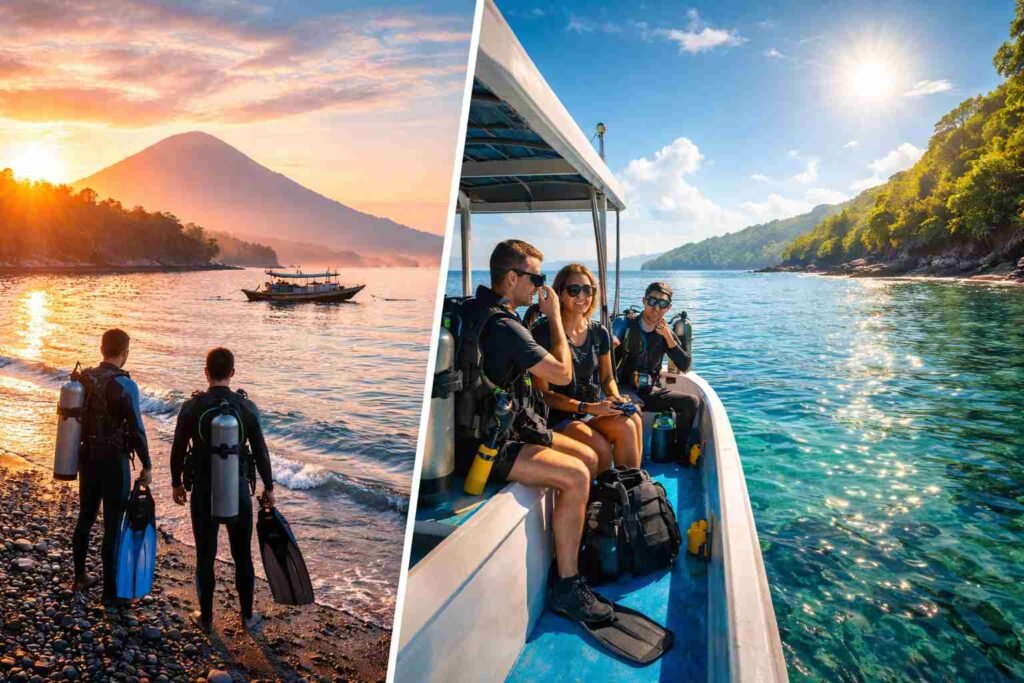
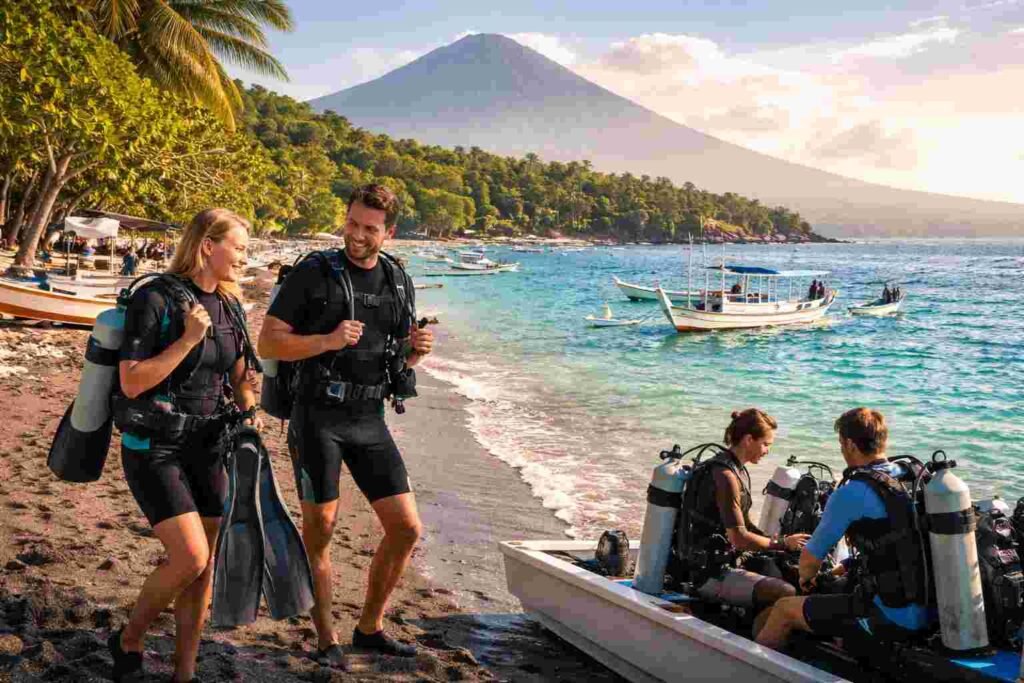
Tulamben diving is famous for its easy shore entries over volcanic pebbles and its legendary wreck dive. The sites are close together, and conditions are often calm, making it ideal for beginners and those who want straightforward logistics.
Amed diving offers more variety in underwater topography. You’ll find coral gardens, small walls, slopes, and drift dives depending on the bay. The diving here feels more exploratory, especially if you enjoy trying multiple sites over several days.
Key takeaway:
- Tulamben = iconic, concentrated dive sites
- Amed = diverse and spread-out underwater landscapes
Signature Dive Sites
Tulamben’s reputation largely revolves around a single world-class attraction: the USAT Liberty shipwreck. This massive wreck lies close to shore and is accessible to divers of all levels, even snorkelers in some sections. It’s covered in corals and swarming with fish, making it one of the easiest and most rewarding wreck dives in the world.
Amed doesn’t have one dominant site but instead offers a collection of memorable dives. The Japanese Wreck near Banyuning is smaller but full of macro life, while sites like Jemeluk Bay feature colorful coral gardens perfect for relaxed dives and underwater photography.
Summary:
- Tulamben = one major bucket-list wreck + several supporting sites
- Amed = many scenic reefs and smaller wrecks
Marine Life Encounters
Both areas sit along Bali’s northeast coast, so they share similar marine ecosystems, but the experience can feel different.
In Tulamben, the wreck structure attracts large schools of fish such as jacks and barracuda, along with bumphead parrotfish at sunrise. The sandy slopes nearby are also excellent for macro creatures like nudibranchs and shrimp.
Amed is particularly loved by photographers for its healthy coral reefs and macro life. You’ll often see reef fish, turtles, and occasional reef sharks. The diversity of habitats means every dive can feel unique.
Overall:
- Tulamben = big schools + macro around the wreck
- Amed = vibrant reefs + strong macro variety
Read more: Why Padang Bai Is a Favorite for Dive Training
Conditions and Difficulty Level
Both Tulamben and Amed are suitable for beginners, but subtle differences may influence your choice.
Tulamben generally has very mild currents and predictable conditions. The shore dives are straightforward, and many dive sites are sheltered. This makes it one of the best places in Bali for first-time divers or certification courses.
Amed can also be beginner-friendly, especially in bays like Jemeluk, but some sites experience stronger currents, offering more excitement for experienced divers. Because the sites are more spread out, you may also spend more time traveling between dives.
Quick comparison:
- Tulamben = easiest and most consistent conditions
- Amed = mix of easy and moderately challenging dives
Read more: How to Prepare for Strong Currents in Nusa Penida
Accessibility and Travel Time
From southern Bali (like Canggu, Seminyak, or the airport), both destinations take roughly 2.5 to 3 hours by car along scenic coastal roads.
Tulamben is slightly more straightforward if your main goal is to dive intensively, since most dive shops and accommodations are clustered around the main sites.
Amed requires a bit more planning due to its long coastline, but the views along the drive and the variety of bays make the journey part of the experience.
Read more: Night Diving in Amed
Which Destination Is Better for You?
Choosing between Tulamben and Amed depends on what you want from your dive trip.
Choose Tulamben if you:
- Want to dive the famous Liberty wreck
- Prefer easy logistics and calm conditions
- Are a beginner or taking a course
- Plan a short dive-focused trip
Choose Amed if you:
- Want more variety in dive sites
- Enjoy coral reefs and underwater photography
- Like exploring different bays and viewpoints
- Are staying longer and want a mix of diving and relaxing
Read more: Nusa Penida Diving for Adventure Seekers
Can You Visit Both?
Absolutely—and many divers do. Because Tulamben and Amed are only about 30–40 minutes apart by car, it’s easy to combine them in one trip. A popular plan is to base yourself in Amed for the scenery and variety, then take a day trip to Tulamben to dive the wreck.
This way, you get the best of both worlds: Tulamben’s iconic underwater history and Amed’s colorful reef diversity.
Read more: Best Season to Dive in Amed
Final Thoughts
Tulamben and Amed are often compared, but they’re not competitors—they’re complementary dive destinations. Tulamben stands out for its legendary wreck and simplicity, while Amed shines with its range of dive sites and scenic coastal charm.
Whether you’re a beginner looking for your first underwater adventure or an experienced diver chasing new marine encounters, you really can’t go wrong with either. The best choice simply depends on the kind of diving story you want to tell when you surface.