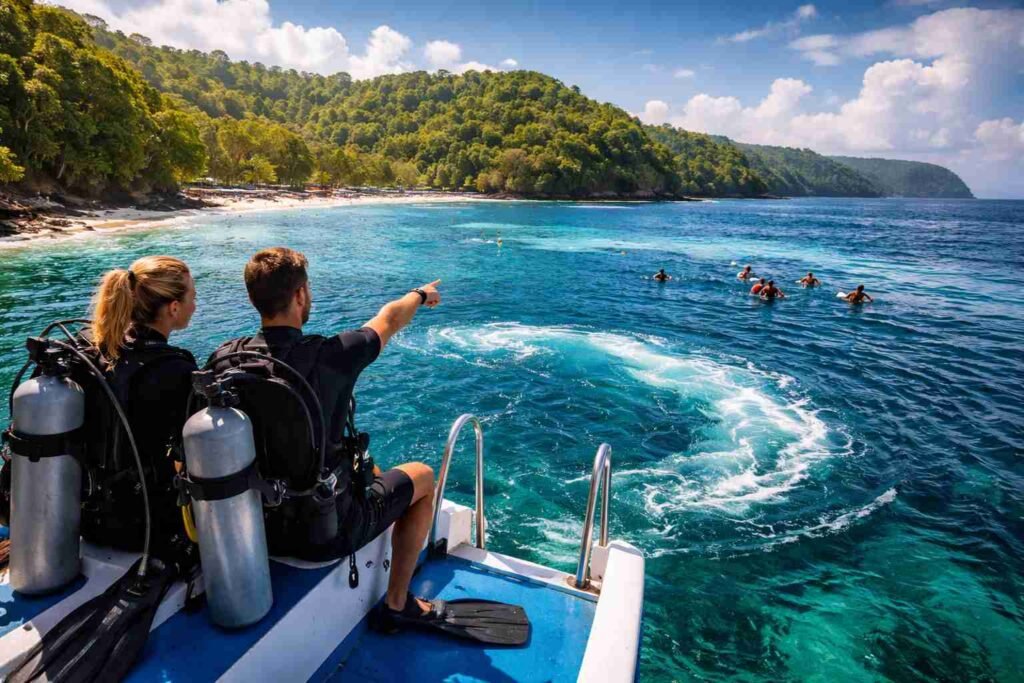

Is There Current in Padang Bai Dive Sites? This is one of the most common questions divers ask before planning a trip to Padang Bai. Known for its clear water, diverse marine life, and accessible shore entries, the area is often considered beginner-friendly. However, like most dive destinations in Bali, currents can vary depending on the site, tide, and season. Understanding what to expect helps divers plan safer and more enjoyable dives.
Understanding Currents in Padang Bai
Currents in Padang Bai are generally mild compared to more exposed sites around Bali. The bay’s geography offers natural protection from strong ocean flow, which is why many dive schools use it for training and beginner dives. Most days you’ll experience little to no current, especially in sheltered areas.
That said, conditions are never completely static. Water movement can change with tides, wind direction, and swell. Even when currents are present, they are typically manageable and rarely strong enough to create challenging drift conditions.
Why Currents Occur Here
Tidal Movement
Like all coastal environments, Padang Bai is influenced by tidal exchanges. Incoming and outgoing tides can create gentle water flow, particularly near channels and points where water funnels through narrower areas.
Seasonal Weather Patterns
During certain months, especially when wind patterns shift, surface chop can increase slightly. This doesn’t always translate into strong underwater current, but it may create mild surge in shallow sections.
Site Topography
Some dive sites feature slopes, small walls, or reef corners that can accelerate water movement locally. This means one part of a dive may feel calm while another area has noticeable flow.
Read more: Top Marine Life You’ll See in Nusa Penida
Current Conditions by Popular Dive Sites
Blue Lagoon
Blue Lagoon is typically the calmest site in the area. It’s protected and shallow, making it ideal for beginners, training dives, and underwater photography. Currents here are usually minimal, though mild surge can occur if there’s swell.
Jepun
Jepun offers sandy patches and artificial structures that attract marine life. Currents are generally light but can occasionally pick up slightly mid-water. Visibility and comfort levels remain good for most divers.
Bias Tugel
This site can experience slightly more movement than the others because it’s a bit more exposed. Still, currents are usually moderate at most, and dive guides plan entries based on conditions to keep dives relaxed.
Read more: What Makes Menjangan Different from Other Bali Dive Sites
How Strong Are the Currents Really?
For most of the year, currents in Padang Bai range from none to mild. On days with stronger tidal exchange, you might feel a gentle push, but it rarely requires advanced drift diving skills. Many divers describe it as “easy movement” rather than a true current.
Because of this predictability, the area is suitable for:
- Beginner divers
- Open Water courses
- Refresher dives
- Macro photography
Advanced divers also enjoy the sites, especially for critter hunting, but they typically won’t find high-energy drift conditions here.
Read more: What Water Temperature Can You Expect in Menjangan Island
When Currents Are Most Noticeable
Currents tend to be slightly more noticeable:
- Around full and new moon phases (stronger tides)
- During tidal changes rather than slack tide
- When ocean swell increases due to wind
Dive operators usually schedule dives to avoid peak movement, so most divers won’t notice significant flow.
Read more: Diving Blue Lagoon vs Jepun: What’s the Difference
Safety Tips for Diving in Mild Current
Stay Close to Your Guide
Local guides know how currents behave at each site and will choose routes that keep dives comfortable.
Maintain Good Buoyancy
Proper buoyancy helps you move efficiently and reduces effort if you encounter light flow.
Monitor Your Position
Even mild current can slowly move divers along the reef, so staying aware of your location helps avoid unnecessary swimming.
Use Natural Shelter
Reef contours, sandy patches, and bommies often provide calm pockets if water movement increases slightly.
Read more: Why Underwater Photographers Love Nusa Penida
Is Padang Bai Good for Beginners?
Yes — the generally calm conditions are one of the biggest reasons Padang Bai is popular for first-time divers. The combination of gentle currents, easy entries, and interesting marine life creates an ideal learning environment. While no ocean site is completely current-free, the conditions here are among the most forgiving in Bali.
Read more: What Water Temperature Should You Expect in Tulamben
Final Thoughts
Currents do exist in Padang Bai dive sites, but they are usually mild and manageable. Most dives are calm, relaxed, and suitable for all experience levels, especially beginners. With proper planning, guidance, and awareness of tidal timing, divers can enjoy the area’s reefs, sandy slopes, and vibrant marine life without worrying about strong water movement.
For anyone considering diving in Padang Bai, the short answer is simple: yes, there can be current — but it’s typically gentle, predictable, and part of what keeps the reefs healthy and full of life.