
How To Prepare For Strong Current In Nusa Penida? Nusa Penida is one of Indonesia’s most breathtaking marine destinations, famous for its crystal-clear water, dramatic underwater landscapes, and encounters with majestic marine life. However, what makes this island so special also makes it challenging: strong and unpredictable currents. Whether you’re planning to dive, snorkel, or simply explore the coastline, understanding how to prepare for these conditions is essential for both safety and enjoyment.
This guide will walk you through practical, experience-based tips to help you feel confident and ready when exploring the powerful waters around Nusa Penida.
Why Currents in Nusa Penida Are So Strong
The waters around Nusa Penida sit between the Indian Ocean and the Bali Sea, creating a natural funnel effect. This geography causes tidal flows to accelerate as water moves between the islands. As a result, currents can change direction quickly and vary significantly depending on the tide cycle.
Certain dive sites are especially known for strong currents, including:
- Crystal Bay
- Manta Point
- Blue Corner
Understanding that these conditions are normal — not dangerous when managed correctly — is the first step to preparing yourself.
Choose the Right Operator or Guide
One of the most important decisions you can make is selecting a professional dive center or tour operator. Experienced local guides understand tidal charts, seasonal patterns, and site-specific conditions.
A good operator will:
- Brief you thoroughly before entering the water
- Adjust the plan based on real-time conditions
- Provide safety equipment such as surface marker buoys
- Ensure group sizes are manageable
If you’re diving, always confirm that guides are familiar with drift diving techniques, which are commonly used in Nusa Penida.
Improve Your Skills Before You Go
Strong currents don’t necessarily mean you need to be an expert, but you should feel comfortable in the water.
For Divers
- Practice buoyancy control
- Learn efficient finning techniques
- Stay close to your guide and group
- Consider taking a drift diving specialty
For Snorkelers
- Be comfortable floating and treading water
- Use fins for better propulsion
- Stay within designated areas
Confidence in your basic skills reduces fatigue and helps you stay calm if the current picks up.
Understand the Dive or Snorkel Briefing
Never skip the briefing — it’s your safety roadmap. Guides typically explain:
- Entry and exit points
- Expected current direction
- Maximum depth or boundaries
- What to do if separated
Pay close attention and ask questions if anything is unclear. Knowing the plan ahead of time makes it much easier to react calmly underwater.
Use the Right Equipment
Proper gear makes a huge difference when dealing with moving water.
Recommended items include:
- Well-fitting fins for efficient kicks
- A mask with good visibility
- Reef-safe wetsuit for protection and buoyancy
- Surface marker buoy (for divers)
- Reef hook (only when instructed by guides)
Avoid bringing unnecessary gear that could create drag or make movement harder.
Read more: How Deep Are the Dive Sites in Nusa Penida?
Stay Calm and Go With the Flow
The biggest mistake people make in strong currents is trying to fight them. This quickly leads to exhaustion.
Instead:
- Stay horizontal and streamlined
- Use slow, controlled movements
- Follow your guide’s signals
- Drift naturally when appropriate
Remember, most dives in Nusa Penida are designed as drift dives, meaning the current actually helps carry you along the reef.
Read more: Tulamben Diving Conditions Month by Month
Know What to Do if You Feel Uncomfortable
Even with preparation, conditions can feel overwhelming. It’s always okay to end a dive or snorkel early.
If you feel uneasy:
- Signal your guide immediately
- Stay on the surface if needed
- Inflate your BCD (for divers)
- Focus on slow breathing
Your safety and comfort always come first — there’s no pressure to push beyond your limits.
Read more: How Cold Is the Water in Nusa Penida?
Check Seasonal Conditions
Currents in Nusa Penida vary throughout the year. While diving is possible year-round, conditions can be stronger during certain tidal periods and moon phases.
In general:
- Dry season (April–October): better visibility, cooler water
- Wet season (November–March): warmer water, sometimes milder currents
Local operators will always have the most accurate day-to-day information.
Read more: How Many Dives Do You Need in Tulamben?
Respect the Ocean
The ocean around Nusa Penida is powerful and dynamic. Respecting it means:
- Following instructions
- Staying within your skill level
- Avoiding risky behavior
- Protecting marine life and reefs
When you approach the experience with respect and preparation, strong currents become part of the adventure rather than something to fear.
Read more: Why Padang Bai Is a Favorite for Dive Training
Final Thoughts
Preparing for strong currents in Nusa Penida isn’t about eliminating risk — it’s about understanding the environment and equipping yourself with the right knowledge and mindset. With the help of experienced guides, proper skills, and a calm approach, you can safely enjoy some of the most thrilling underwater experiences in Indonesia.
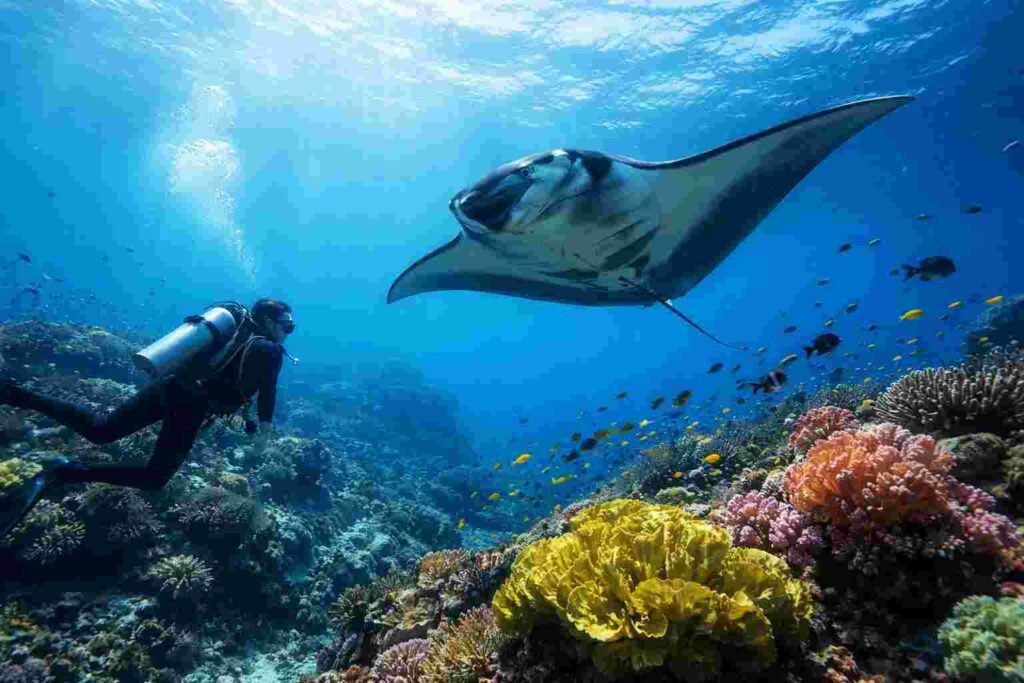
From drifting along vibrant coral walls to encountering manta rays in open water, the currents are simply part of what makes Nusa Penida so unforgettable. Plan well, stay aware, and you’ll discover that these powerful waters offer not just excitement, but an incredible sense of connection with the ocean.