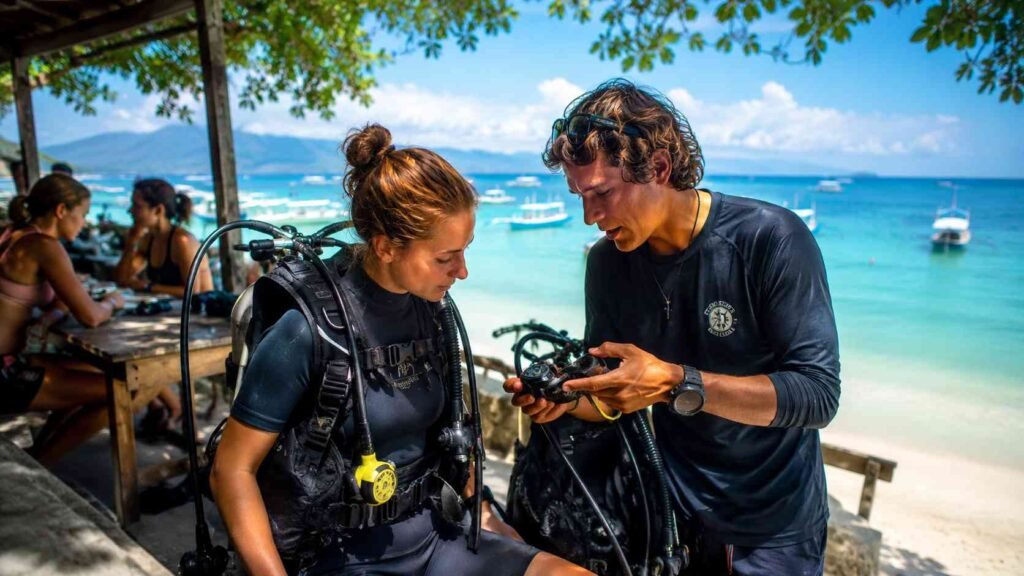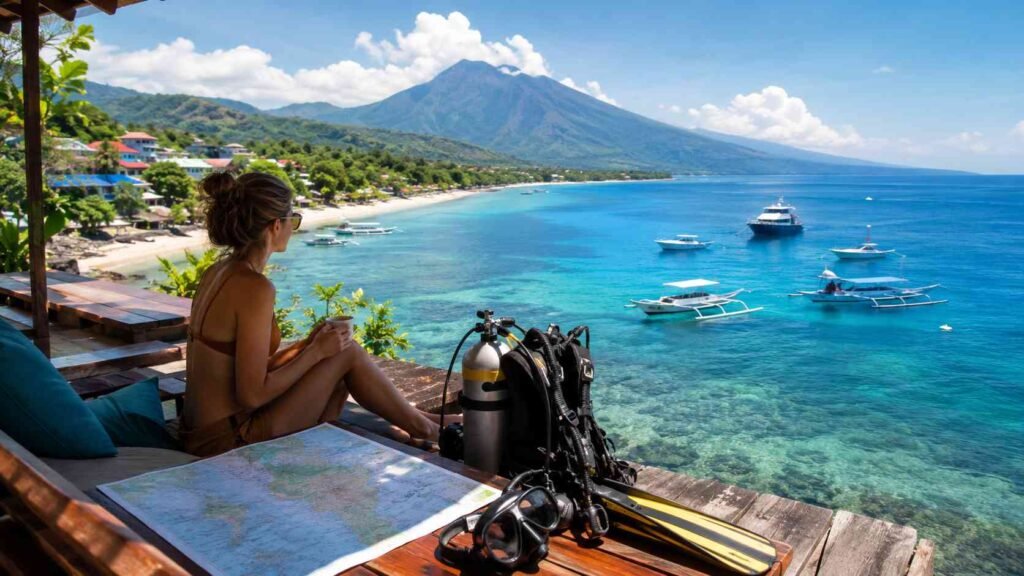
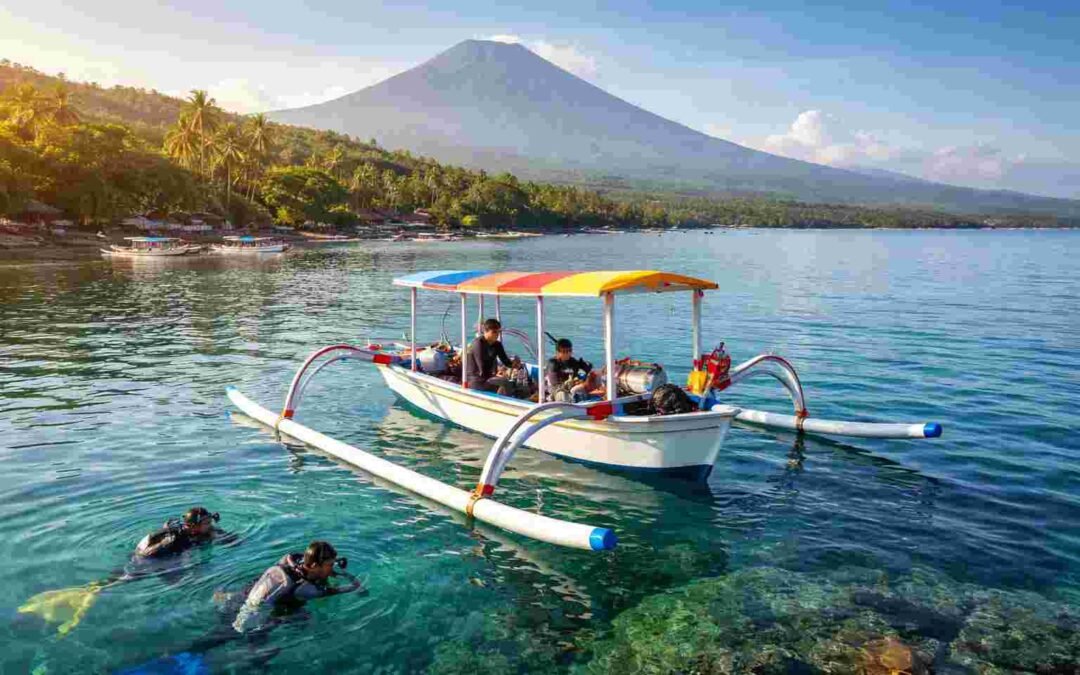
Amed Macro Diving Guide. Amed is widely known as one of Bali’s most relaxed coastal destinations, but beneath its calm surface lies a hidden world that macro enthusiasts absolutely love. Located on the northeast coast of Amed in Bali, this region offers a unique mix of volcanic sand slopes, artificial reefs, and gentle conditions that create the perfect habitat for small and rare marine life.
If you enjoy slow, detailed dives and the thrill of spotting creatures most divers swim past, Amed is a place you shouldn’t miss. This guide covers everything you need to know — from what you can see to the best dive sites and practical tips — so you can plan an unforgettable macro diving experience.
Why Amed Is Perfect for Macro Diving
Macro diving is all about patience and observation, and Amed provides ideal conditions for both. Unlike areas known for strong currents or large pelagic species, most dive sites here are calm, shallow to mid-depth, and easy to navigate. This allows divers to take their time scanning the sand, rubble, and coral patches where tiny critters thrive.
Another reason macro life flourishes here is the volcanic black sand. While it may look barren at first glance, it actually creates a perfect camouflage environment for unusual species. Many creatures have evolved colors and textures that blend seamlessly with the substrate, making each dive feel like a treasure hunt.
Visibility in Amed is generally good, often ranging from 15 to 25 meters, and water temperatures usually sit between 26–29°C. These comfortable conditions mean long, relaxed dives — ideal for photographers and marine life lovers alike.
Top Macro Dive Sites in Amed
1. Jemeluk Bay
Jemeluk Bay is one of Amed’s most accessible dive sites and a great place to start. The gentle slope features coral patches, artificial structures, and sandy areas filled with macro surprises.
Here you can often find nudibranchs, ghost pipefish, leaf scorpionfish, and a variety of shrimp species. The shallow depth also makes it excellent for extended bottom time.
2. Pyramids
This site is famous for its artificial reef structures, which attract both reef fish and macro life. The pyramids create shelter where small creatures hide, making it a favorite for underwater photographers.
Keep an eye out for frogfish, pipefish, and tiny crustaceans living among the structures.
3. Lipah Bay
Lipah Bay offers a mix of coral reef and sandy bottom, providing diverse habitats in a single dive. Macro hunters often find octopus, cuttlefish, and rare nudibranch species here.
Because conditions are usually calm, it’s suitable for beginners who want to try macro diving for the first time.
Read more: Best Dive Sites in Amed
4. Japanese Wreck
While the wreck itself attracts wide-angle interest, the surrounding reef and sand slopes are fantastic for macro. Look closely around the structure and nearby coral heads to spot pygmy seahorses, shrimp, and colorful nudibranchs.
Read more: Best Time of Year to Dive in Tulamben
Marine Life You Can Expect to See
Macro diving in Amed is all about the details. Some of the most sought-after creatures include:
- Nudibranchs in a wide range of colors and patterns
- Frogfish camouflaged on sponges or sand
- Ghost pipefish hovering near soft corals
- Pygmy seahorses hidden in gorgonian fans
- Harlequin shrimp and other tiny crustaceans
- Octopus and cuttlefish displaying fascinating behavior
Each dive can reveal something new, which is why many divers return again and again.
Read more: Padang Bai vs Tulamben: Which Is Better
Best Time for Macro Diving in Amed
Macro diving in Amed is excellent year-round, but conditions are typically best during the dry season from April to November. During this period, seas are calmer and visibility tends to be more consistent.
However, even in the rainy season, macro life remains abundant. In fact, some divers prefer these months because fewer visitors mean quieter dive sites and more relaxed dives.
Read more: Is Nusa Penida Diving Only for Advanced Divers
Tips for a Successful Macro Dive
1. Move Slowly
Macro creatures are easy to miss if you rush. Slow finning and careful observation will dramatically increase what you see.
2. Perfect Your Buoyancy
Good buoyancy is essential to avoid disturbing the sand and to protect fragile marine habitats.
3. Bring the Right Gear
If you’re into photography, a macro lens and focus light will help capture the tiny details that make these dives special.
4. Dive With a Local Guide
Local guides know exactly where critters like to hide and can help you spot species you might otherwise overlook.
Read more: Wall Diving in Menjangan: What Makes It So Special
Who Should Try Macro Diving in Amed?
Macro diving here is suitable for almost everyone. Beginners can enjoy the calm conditions and shallow depths, while experienced divers and photographers will appreciate the diversity and abundance of subjects.
It’s especially rewarding for divers who enjoy marine biology, underwater photography, or simply discovering the ocean’s hidden details rather than chasing big animals.
Read more: Macro Diving in Tulamben: What Creatures Can You See
Final Thoughts
Amed proves that you don’t need strong currents or dramatic drop-offs to have an incredible dive. Its charm lies in the small things — the perfectly camouflaged frogfish, the delicate nudibranchs, and the fascinating behaviors of tiny reef creatures.
Whether you’re a seasoned macro photographer or just curious to explore a different side of diving, Amed offers a relaxed environment, rich biodiversity, and endless opportunities to discover something new on every dive.
If you take the time to slow down and look closely, you’ll find that the smallest marine life often creates the biggest memories.