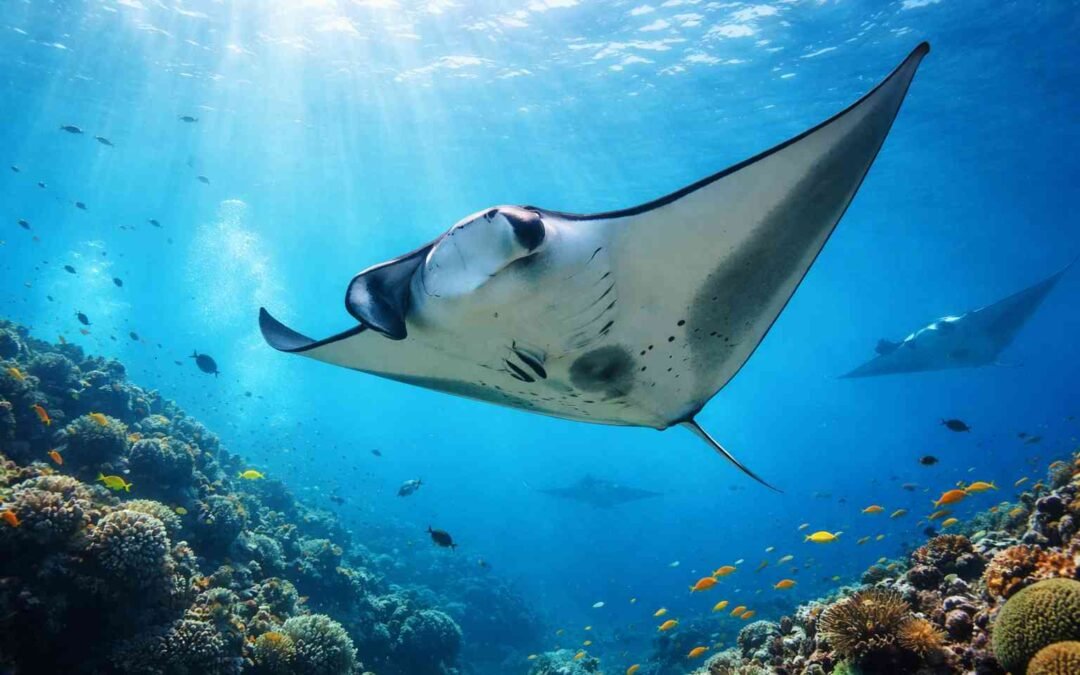
Manta Point Diving What To Expect. If you’ve ever dreamed of swimming alongside giant manta rays in the open ocean, Manta Point diving is an experience you’ll never forget. Located off the coast of Nusa Penida, Bali, Manta Point is one of the most iconic dive sites in Indonesia. Known for its resident reef manta rays, dramatic coastal cliffs, and nutrient-rich waters, this site offers a truly unique underwater adventure.
In this article, we’ll explore what you can expect before, during, and after your dive at Manta Point—so you can prepare properly and make the most of this unforgettable experience.
Where Is Manta Point?
Manta Point is located on the southwest side of Nusa Penida, a small island southeast of Bali. Most divers depart from Sanur or Padang Bai by boat early in the morning. The boat ride typically takes 45 minutes to 1.5 hours depending on sea conditions and departure point.
The dive site itself sits near rocky limestone cliffs, and the surface conditions can vary from calm to moderately choppy. Because of its location in the open ocean, weather and tides play an important role in determining dive conditions.
Why Manta Point Is So Special
The main attraction at Manta Point is, of course, the reef manta ray. Unlike oceanic mantas that live in deeper waters, reef mantas frequently visit this site to feed and visit cleaning stations.
Cleaning stations are specific areas where smaller fish, such as cleaner wrasse, remove parasites from the mantas’ skin. These stations are often located on shallow rock formations, allowing divers to observe mantas hovering gracefully just a few meters away.
What makes this site extraordinary is the high chance of sightings. While marine life can never be guaranteed, Manta Point is known for consistent manta encounters throughout the year.
What the Dive Is Like
Depth and Profile
Manta Point is generally considered a relatively shallow dive. Depths usually range from 5 to 20 meters, making it suitable for Open Water certified divers. The dive often begins with a descent to a rocky bottom where divers position themselves near a cleaning station.
Because mantas are sensitive to sudden movements, divers are usually instructed to remain still, maintain good buoyancy control, and avoid chasing or touching the animals.
Water Temperature
One of the most surprising things about Manta Point is the water temperature. Although Bali is tropical, the water at Manta Point can be cooler than expected—sometimes ranging between 20°C to 24°C. Thermoclines are common, meaning you might feel sudden cold layers during the dive.
Wearing a 3mm or 5mm wetsuit is recommended, especially if you tend to get cold easily.
Visibility and Conditions
Visibility can vary significantly. On good days, you may enjoy 15 to 20 meters of visibility. On other days, especially when plankton levels are high (which attracts mantas), visibility may drop to 5 to 10 meters.
The currents are generally mild at Manta Point compared to other Nusa Penida dive sites. However, surge can be present, especially in shallow areas. Surge means you may feel a gentle back-and-forth motion caused by waves above.
Marine Life Beyond Mantas
While manta rays are the highlight, they are not the only marine life you can expect to see.
The rocky bottom and coral patches host:
- Moray eels
- Octopus
- Reef sharks (occasionally)
- Blue-spotted stingrays
- Nudibranchs
- Schools of fusiliers and trevally
If you’re lucky, you may also encounter bamboo sharks resting under rocks or turtles cruising through the area.
Macro lovers can enjoy exploring the smaller marine life while waiting for manta sightings.
Read More : Is Padang Bai Good For Diving In Bali?
Skill Level Required
Manta Point is suitable for:
- Open Water divers
- Advanced divers
- Certified beginner divers with good buoyancy
Because the dive is relatively shallow and currents are usually manageable, it’s often recommended as a good introduction to Nusa Penida diving. However, divers should still feel comfortable in ocean conditions and slightly cooler water.
If you haven’t dived in a while, consider doing a refresher dive before heading to Manta Point.
Read More : Is Nusa Penida The Best Spot In Bali?
Best Time to Dive Manta Point
Manta rays can be seen year-round at Manta Point. However, sea conditions are typically calmer during Bali’s dry season, which runs from around April to October.
During this period, visibility may be better, and boat rides are often smoother. That said, mantas feed on plankton, and plankton-rich water sometimes reduces visibility—so a slightly “green” ocean can actually mean better chances of sightings.
Morning dives are usually preferred, as wind and waves tend to increase in the afternoon.
Read More : Why Menjangan Island Is Hidden Paradise Diving
How to Prepare for the Dive
To make the most of your Manta Point diving experience:
- Bring a thicker wetsuit if you’re sensitive to cold.
- Listen carefully to the dive briefing, especially regarding manta interaction rules.
- Practice neutral buoyancy to avoid touching the reef.
- Stay calm and patient—mantas often circle back multiple times.
Underwater photography is allowed, but divers should avoid using flash directly into the mantas’ eyes and never block their path.
Read More : Why Amed Is Perfect For Relaxed Diving
Safety and Environmental Responsibility
Responsible diving is crucial at Manta Point. Manta rays are protected species in Indonesia, and touching or disturbing them is strictly prohibited.
Good dive operators will emphasize:
- No chasing or riding mantas
- Maintaining a respectful distance
- Proper buoyancy control
- Following the dive guide at all times
By respecting marine life, we ensure that Manta Point remains a sustainable and thriving ecosystem for years to come.
Read More : Everything You Need To Know Before Diving In Tulamben.
What Makes the Experience Unforgettable
There is something truly magical about seeing a manta ray glide effortlessly through the water. With wingspans that can reach up to four meters, these gentle giants move with grace and calmness.
Many divers describe the experience as peaceful and almost spiritual. When a manta makes eye contact or circles above you at the cleaning station, time seems to slow down.
It’s not just a dive—it’s a memory that stays with you long after you surface.
Read More : Top Dive Site In Padang Bai For All Level.
Final Thoughts
Manta Point diving offers one of the most iconic underwater encounters in Bali. While conditions can vary and the water may be cooler than expected, the reward of swimming alongside majestic manta rays makes every moment worthwhile.
Whether you are a first-time visitor to Nusa Penida or an experienced diver seeking unforgettable marine life encounters, Manta Point should be at the top of your diving bucket list.
Prepare well, dive responsibly, and enjoy one of Bali’s most breathtaking underwater experiences.